Can Rachel Reeves save the City?
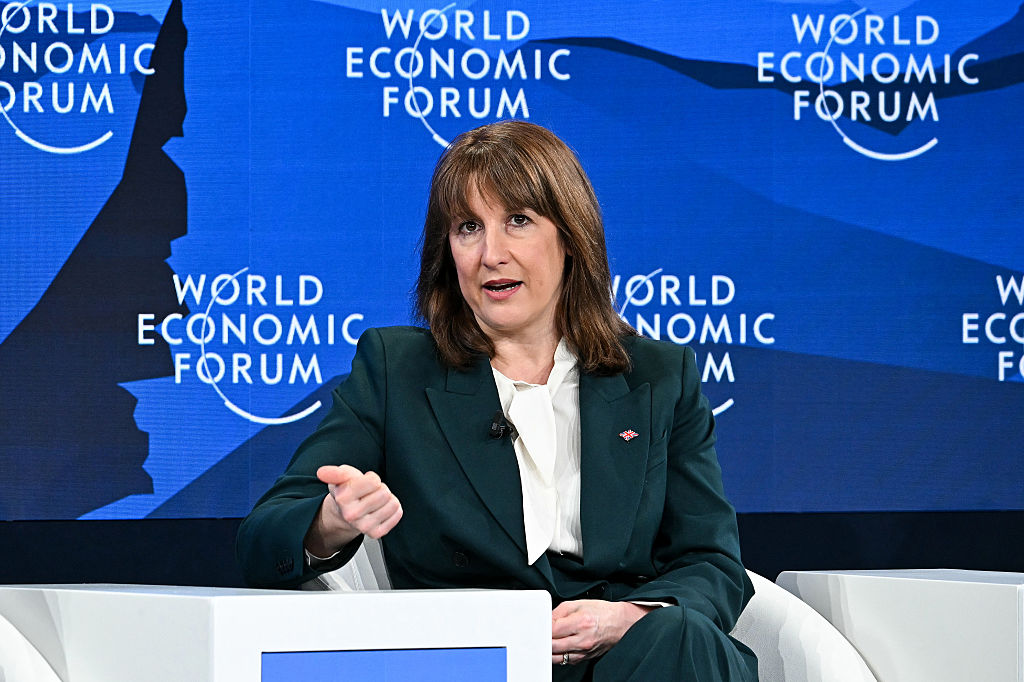
Chancellor Rachel Reeves is mulling a tax cut, which would be welcome – but it’s nowhere near enough, says Matthew Lynn


You are now subscribed
Your newsletter sign-up was successful
Want to add more newsletters?

Twice daily
MoneyWeek
Get the latest financial news, insights and expert analysis from our award-winning MoneyWeek team, to help you understand what really matters when it comes to your finances.

Four times a week
Look After My Bills
Sign up to our free money-saving newsletter, filled with the latest news and expert advice to help you find the best tips and deals for managing your bills. Start saving today!
Over the last couple of weeks, there have been some faint signs that the initial public offering (IPO) market in London is finally coming back to life. The digital bank Shawbrook said on Monday it would list its shares in the UK at a value of around £2 billion. Last week, the food and drinks company Princess Group, which makes Branston’s pickle as well as tinned tuna, said it was considering a listing in London, with a valuation of around £1.5 billion. The Beauty Tech Group made its debut on the market last Friday. And yet, as welcome as that flurry of activity is, it should not distract anyone from the wider picture.
The London market remains in a dire state. A report last week found that it has slipped to 22nd place globally for new equity issues, behind even Mexico and Qatar. The amount of capital raised through IPOs has fallen to its lowest level in 35 years, while the total number of companies listed on the exchange has fallen from close to 2,500 a decade ago to only a little over 1,500 now. Plenty of companies have shifted their listing to the US, others have decided to accept a takeover, and many entrepreneurs building new companies have decided a quote in London is no longer worth either the expense or the hassle. It could get a lot worse. There are already ominous signs that drugs giant AstraZeneca may shift its listing to the US, and BP could easily be taken over by one of its rivals.
MoneyWeek
Subscribe to MoneyWeek today and get your first six magazine issues absolutely FREE

Sign up to Money Morning
Don't miss the latest investment and personal finances news, market analysis, plus money-saving tips with our free twice-daily newsletter
Don't miss the latest investment and personal finances news, market analysis, plus money-saving tips with our free twice-daily newsletter
But Reeves needs to be a lot bolder. Stamp duty should be scrapped completely. A levy every time a share is bought or sold is a huge competitive disadvantage compared with other markets where people can trade equities freely without being forced to pay anything to the government. Sure, it raises slightly over £3 billion, and the Treasury is strapped for cash. But in the medium term, far more tax revenue will be lost if the City turns into an irrelevance on the global equity markets. The levy is a relic of the days when the London market was so important that it could afford to be taxed when others were not. Those days are long gone.
Rachel Reeves must slash the red tape
The mess of governance codes that have built up over the last 20 years need to be scrapped, too. Quoted companies have to comply with a whole list of regulation – from diversity on the board, to controls on executive pay, to environmental and social targets – that simply don’t exist for private companies, or which are far more lightly imposed on rival markets. These rules might be well intentioned, but they impose big costs. They also take up a huge amount of managements’ time for no discernible benefit. London could lead the world in switching back to a simpler system.
Finally, why not offer entrepreneurs a tax break for listing in London?
There could be an exemption from capital gains tax for any founder who decides to float their business in the City. That would be a huge incentive over selling it to a foreign buyer or private equity firm. Who knows, it might even persuade a few of them to stay in Britain instead of moving to Dubai or the US.
The London stock market is facing extinction. The City has plenty of other businesses, from insurance to fund management to issuing debt. But the blunt truth is that there is not a major financial centre anywhere in the world that does not also have a thriving equity market at the centre of its operations. In London, that is disappearing. The LSE needs radical help – a tiny tweak to stamp duty won’t be nearly enough to save it.
This article was first published in MoneyWeek's magazine. Enjoy exclusive early access to news, opinion and analysis from our team of financial experts with a MoneyWeek subscription.

-
 MoneyWeek Talks: The funds to choose in 2026
Podcast Fidelity's Tom Stevenson reveals his top three funds for 2026 for your ISA or self-invested personal pension
-
 Three companies with deep economic moats to buy now
Opinion An economic moat can underpin a company's future returns. Here, Imran Sattar, portfolio manager at Edinburgh Investment Trust, selects three stocks to buy now


-
Three companies with deep economic moats to buy now
Opinion An economic moat can underpin a company's future returns. Here, Imran Sattar, portfolio manager at Edinburgh Investment Trust, selects three stocks to buy now
-
 Should you sell your Affirm stock?
Affirm, a buy-now-pay-later lender, is vulnerable to a downturn. Investors are losing their enthusiasm, says Matthew Partridge
-
 Why it might be time to switch your pension strategy
Your pension strategy may need tweaking – with many pension experts now arguing that 75 should be the pivotal age in your retirement planning.
-
 Beeks – building the infrastructure behind global markets
Beeks Financial Cloud has carved out a lucrative global niche in financial plumbing with smart strategies, says Jamie Ward
-
 Saba Capital: the hedge fund doing wonders for shareholder democracy
Activist hedge fund Saba Capital isn’t popular, but it has ignited a new age of shareholder engagement, says Rupert Hargreaves
-
 Silver has seen a record streak – will it continue?
Opinion The outlook for silver remains bullish despite recent huge price rises, says ByteTree’s Charlie Morris
-
 Investing in space – finding profits at the final frontier
Getting into space has never been cheaper thanks to private firms and reusable technology. That has sparked something of a gold rush in related industries, says Matthew Partridge
-
 Rachel Reeves is rediscovering the Laffer curve
Opinion If you keep raising taxes, at some point, you start to bring in less revenue. Rachel Reeves has shown the way, says Matthew Lynn


