Why the next banking crisis could be even worse

By Associate Editor David Stevenson Dec 04, 2009

David Stevenson

Comments (8) Print this article

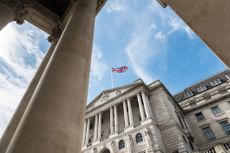
Branch of RBS. © Simon Dawson/Bloomberg

A bad week for bankers

It's not been a great week for British bankers.

There's the ongoing spat between RBS and HM Government over how much the former's heavy hitters can pay themselves in bonuses. Then there's the embarrassing yet somehow inevitable revelation that our banks are the ones most exposed to Dubai – with RBS top of the pile, naturally.

Meanwhile, French President Nicolas Sarkozy has been unable to disguise his glee that Europe's new finance minister is a Frenchman, who he clearly believes will take the City down a peg or two.

But these are just niggles compared to the real dangers the banking system faces.

The cheap money that the UK's lenders have been enjoying is about to dry up, for one thing. But worse still, while central banks have been flooding the world with money, a dangerous imbalance has been building up in the banking sector...

Why our banking system is more fragile than ever before

Over the last year or more, RBS, Barclays and Lloyds Banking Group have been cashing in on as much as £350bn-worth of cheap loans from the Bank of England via the Special Liquidity Scheme (SLS). In other words, they've managed to borrow money for next to nothing then lend it out for a fat profit.

But sadly for these three, that little game is coming to an end, says Credit Suisse. The supply of low-cost cash is drying up. The SLS was closed in January. The last of the loans made under the scheme mature at the start of 2012.

That means these banks will be facing £6bn of extra interest costs over the next four years, says Credit Suisse, as they try to roll these loans over. What's more, the banks will need to raise more than £100bn to meet new liquidity rules during the same time frame.

This is where things start to look grim. British banks aren't the only ones who'll be casting about for more money. A vast amount of debt will need to be refinanced between 2010 and 2012. Worldwide, it adds up to $9.2 trillion, says Dealogic. That's nearly twice the amount refinanced between 2007 and 2009. Indeed, by 2010 total global debt will exceed $49 trillion, says Moody's. That's because many governments are desperate to borrow, too.

Such a huge demand for money is bound to drive up long-term interest rates. Borrowers – forced to compete hard with one another for whatever cash is around – will have to pay more for it. "It's going to be more expensive for banks everywhere to issue debt", says Peter Schraffrik at Dresdner Kleinwort. "That will put pressure on their finances".

That's hardly a good omen for lending, or ongoing economic growth, either.

We haven't learned a thing from the blow-up of 2008

And it could get a lot worse. We've just been through a financial crisis which, we're told, nearly demolished both the global financial system and civil society. So you could be forgiven for assuming that the banks would have battened down the hatches. That they would have shrunk their balance sheets, and cut down on the amount of risk they were exposed to.

But you'd be wrong. In fact, they've done the opposite. At least 353 European lenders have grown in size since the start of 2007, says Bloomberg. Thirty eight of Europe's 100 biggest financial institutions have more assets now than they did at the start of the year. And European bank assets have grown by 25% over the last three years, compared with a 20% increase at US lenders.

The more you look at the numbers, the scarier it gets. Fifteen European banks now have assets - and liabilities, too, although bankers don't like phrasing it that way - larger than their home economies. That compares with ten such lenders three years ago. In Britain, for example, Barclays' balance sheet alone is bigger than the country's entire annual output.


Special FREE report from MoneyWeek magazine: When will house prices bottom out - and how will you know?

  • Why UK property prices are going to fall 50%
  • When it will be time to get back in and buy up half price property


In a nutshell, the number of lenders that are 'too big to fail' has risen sharply. And that means that the scope for something else to go drastically wrong is growing, not shrinking. We haven't learned a thing from the blow-up of 2008. "What we have been doing in the last two years is making banks much bigger", says David Lascelles at the Centre for the Study of Financial Innovation. "We are sowing the seeds for the next crisis".

Don't touch bank shares

Now last time, as we all know to our cost, taxpayers picked up the tab when many banks needed bailing out. But as the risks keep climbing, even governments may not be able to right the ship next time.

"If we have another systemic shock and one or more of these very large banks fails", says Tom Kirchmaier at the London School of Economics, "I have serious concerns whether some of the smaller countries would be in a position to absorb the losses a second time".

Yes, there's lots of talk about some banks being broken up. But the political will to do so has vanished as the stock market has rebounded. No government will be prepared to disrupt the status quo. At least, not until the next crisis.

With that in mind, there's no way we would buy bank shares right now. And we'd avoid chasing up the prices of low-yielding cyclical stocks, which depend on economic growth for their profits.

But one price move does make sense. It's an old MoneyWeek chorus, but the more you look at the threat of another bank blowout, the more the latest gold price rise – 28% since the start of September – makes sense. Even at over $1,200, it's still not too late to buy. No doubt there will be plenty of corrections along the way (Gold's still looking good), but the current gold bull market is a long way from ending.

Our recommended article for today

Don't forget about silver

When gold rises, it drags other precious metals along with it - especially silver. But the supply of silver has fallen recently. And with demand continuing to rise, there's only one way for the price to go, says Dave Fessler.

Comments (8)

Comments

  • 1. Lawrenzh

    (04 December 2009, 11:39AM)  Complain about this comment

    Hi,

    Is SLS the ticker code for Slush Fund Plc?

  • 2. jules

    (04 December 2009, 01:37PM)  Complain about this comment

    I'm a bit confused. If all these banks have been increasing their assets, presumably by writing more debt, then who are they lending all that extra money to? Businesses don;t seem to be getting a look in, and it certainly isn't the public. So, where is it going?

  • 3. Keith

    (04 December 2009, 03:16PM)  Complain about this comment

    If what you say is true then the banks are acting in a criminal fashion. prosecutions under new laws should follow.

  • 4. jacobite

    (04 December 2009, 05:04PM)  Complain about this comment

    I think if the banks blow up again and the taxpayer is put on the hook for the bill I think you can expect riots in the street.

  • 5. David

    (04 December 2009, 09:20PM)  Complain about this comment

    My response to your article would be to move my cash to those banks that are not over geared or don't need the roll over finance.
    Or sell interest short !! 15% rates coming???

  • 6. KtheKing

    (05 December 2009, 11:50AM)  Complain about this comment

    @Keith : Banks are criminal. They are stealing from you and me on a daily basis. And have partners in crime too : politicians. The robbery started in 1970 with the demolish of the gold standard. From then on high risk investing is the name of the game. They know they can get away with it ,because when the sh** hits the fence,they simply print some more money and it's solved. And since politicians are using the same tactics (partners in crime) it's all legal !!!!. Glad you woke up Keith.

  • 7. Mercurio

    (07 December 2009, 02:44AM)  Complain about this comment

    Although some banks globally and UK banks in particular have made some spectacularly bad "investment" decisions, nevertheless many new people worldwide are entering into the economic activity chain (just look at emerging markets). In fact, at this moment, the rate at which people are entering into the "conventional" economic activity chain is much faster than the rate of world population growth. Whether we like it or not, we are lumbered with a fiat money economic system, which means that the only way to pump-prime economic activity is to create debt. You hope that debt-based investment will lead to a net return. Instead of carping, someone (Moneyweek?)should be asking the banks where and in what are they investing right now, other than shoring up their capital ratios.

  • 8. Pete Wilson

    (13 December 2009, 10:55AM)  Complain about this comment

    Interesting the increase in the number of 'to-big-to fail' banks all of a sudden. Seems to me they're all jumping on the gravy train...make yourself to big to fail so whatever you do you can be gauranteed to be bailed out by taxpayers. Parasites.

    There are limits to borrowing, and there is plenty of precedent warnings over this on a nationstate levels as analysed here with an emphasis on the issue of personal debt levels and GDP. It makes the interesting correlation between the cost of servicing debt and the total ratio of debt to GDP. Quite compelling.
    http://www.debtdeflation.com/blogs/2009/12/01/debtwatch-no-41-december-2009-4-years-of-calling-the-gfc/

    It seems to me that the cheap energy is coming to an end and therefore cheap money; the two are tightly coupled. So the banks and industrialists are looking for new sources of money and will become ever more creative. One certainty is it won't be nice for the joe average person.

Commenting is now closed on this article.

FREE - MoneyWeek's daily investment emailJohn Stepek

Our free daily email, Money Morning, is an informative and enjoyable analysis of what's going on in the markets. Written by our Editor, John Stepek, and guest contributors.
Sign up FREE to Money Morning here.