What the stalemate in the eurozone means for you

By MoneyWeek Editor John Stepek Oct 21, 2011

John Stepek

Share with
friends:

Comments (9) Print this article

The 'Efficient Market Hypothesis' is the theory that stands behind the way that most economists and institutional investors view the market.

It sees the market as a sort-of-hyper-efficient supercomputer. All knowable information and perceptions about past, present and future are fed in at one end. Out of the other end pops a perfectly-formed price.

It's utter, utter drivel of course. If that's not self-evident by now, you just need to look at the European situation.

Every time the Europeans pretend they're about to come up with a solution to the Greek / Portuguese / Italian / Spanish / French crisis (delete as applicable), the market leaps.

When they inevitably fail, the market is despondent. For about five minutes. And then it leaps again at the sniff of the next solution.

It's no supercomputer. It's more like a bemused toddler, wondering where the trillion-euro note that nice Dr Merkel pulled out of funny little Mr Sarkozy's ear has got to now...

The deadline for saving the euro has been pushed back – again

At the start of the week, everyone was saying that this Sunday was 'the last chance to save the euro'.

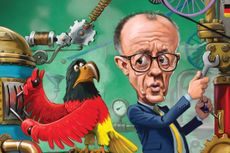
The Germans spent the rest of the week talking down everyone's expectations. And now they've really flung a spanner in the works.

According to this morning's FT, there will have to be a second summit – probably on Wednesday – for the actual decision making, according to a "senior German official". When asked why they were bothering to even have a Sunday meeting anymore, the official told the paper: "That's a good question. Sarkozy wants one."

It's not the sort of comment that gives you a lot of faith that we'll get a positive, win-win outcome from all this. But then, that's no surprise. Europe has put off dealing with this problem for so long that it has snowballed from being merely troublesome (how do you solve a problem like Greece?) to potentially catastrophic (is anyone in Europe actually solvent?).


Want a fast way to hunt big dividend paying stocks?

Performance table

Easily compare UK shares by sector or index using our free performance tool.

From the FTSE 100 to penny stocks – easily find out here


As Lex points out in the FT, there are three things Europe needs to address. First, there's Greece. It's going to go bust. The question is, how much money do the speculators who bought Greek debt lose, over and above the already-agreed 21%? And is there any way to keep pretending it's not a default so that the CDS insurance doesn't have to pay out?

This is a sticky old subject in itself. Some of the private sector Greek debt holders are not too keen to take a bigger haircut. However, compared to the other problems the summit has to tackle, it's relatively minor-looking.

Second, there's Europe's banks. As James Ferguson pointed out in a recent MoneyWeek magazine cover story, unlike the US and the UK, Europe has never really tackled the gaping holes in its banking system. That means lots of its banks are vulnerable to any further financial shocks, and need to raise more money to remain solvent.

The biggest problem of all – saving Spain and Italy

Third, there's the question of how to make the markets stop worrying about bigger eurozone countries going bust. The European Financial Stability Facility (EFSF) is the big bail-out fund. The EFSF is a lot like one of those off-balance sheet vehicles that banks used before 2008 to pretend that their exposure to US sub-prime mortgage debt was at arm's length.

The EFSF itself issues bonds. These borrow money on the behalf of stricken countries like Ireland and Portugal. The rest of Europe agrees to guarantee the bonds. In other words, they'll stand behind the loans if the debts go bad.

Trouble is, while there is currently enough firepower in the EFSF to stand behind the smaller countries, there isn't for the bigger ones. That would require the rest of Europe to commit to bigger guarantees.

However, that in turn has the potential to hurt these country's credit ratings. And one in particular – France. This is the real sticking point between Angela Merkel and Nicolas Sarkozy.

Sarkozy doesn't want France to lose its AAA-rating. This is as much about political ego as anything else. He doesn't want to go down in history as the man who lost France's third Michelin star. So the French solution is basically for the European Central Bank (ECB) to do what the Bank of England and the Fed have been doing. Print money and buy European government debt with it, via the EFSF (you do this by turning the EFSF into a bank, which can then access funds from the ECB).


Sign up for a 3-week FREE trial of MoneyWeek
and get the following free as well

"The only financial publication I could not be without."
John Lang, Director, Tower Hill Associates Ltd


But Merkel doesn't want the ECB to start printing money. Her countryfolk remember what happened the last time a local central banker started up the printing presses. You can point to the current absence of hyperinflation in Japan, Britain and the US all you like. But Weimar looms large in the German psyche, and with good reason.

Germany would rather figure out a way to boost the amount of firepower the EFSF has. It would do this by using it to guarantee the first 20-30% of each bond issue, rather than the whole lot. But of course, there are lots of problems with this too. Bonds without guarantees would sell off, losing out to those with guarantees, and all manner of market distortion would ensue.

What's it all boil down to?

In short, don't expect big things from this weekend meeting. Given that markets haven't really sold off this week, I suspect there might be some disappointment come Monday.

In the longer run, I'd expect more euro weakness ahead. Almost any solution would involve a weaker euro. If the ECB prints, then the euro will fall (although I think you could then expect a big surge in stock markets). But any unsatisfactory fudge is also going to be bad for the euro, because it raises the prospect of more turmoil ahead.

Spread betting of course is one way to play this, but it's very much a short-term trade (you can learn more about how to spread bet with our free email, MoneyWeek Trader). We'll be looking at more long-term, less risky ways to bet on a weaker euro in a forthcoming issue of MoneyWeek magazine (if you're not already a subscriber, get your first three copies free here).

Our recommended article for today

The ingenious plan that could transform this stock

Takeovers are always a risk, and buying the wrong company can be disastrous. But this small-cap software firm may have found the perfect partner. And that could mean a rapid transformation in its fortunes, says Tom Bulford.

Comments (9)

Share with
friends:

Comments

  • 1. jt

    (21 October 2011, 11:12AM)  Complain about this comment

    I offered a suggestion I called "debt leveling" where each entity in a group (country or bank) party to an agreement could agree to cancel any other other parties debt (regardless of to whom it was owed) providing i. they were party to the agreement and ii. cancelled an equivilent amount for some one else.
    This would have variables: like time, cash, goods, etc. but the outcome could be a massive "withdrawal" i.e. cancellation of outstanding debt.
    I called it debt leveling.
    There has been no reply to my suggestion as yet. jt.

  • 2. Les

    (21 October 2011, 11:20AM)  Complain about this comment

    It seems increasingly evident that the EFSF will not be able to raise sufficient funds to bail out all they deem necessary to bail out over failed sovereign debt (Bonds).
    Mention of Banks' exposure to derivatives seems to have taken a back seat. I heard it said yesterday that there are $600 trillion worth of derivatives doing the rounds. If that is so, then how will banks & governments cope with them unwinding? Is it the case that the negative and positive sides of derivatives will cancel each other out? or is the situation dire?
    Can it be that the collapse of Bond Markets (brought about by a cascade of defaults by many nations) will be the spark that brings about the unwinding of derivatives? Is that what so many are really scared of, but not saying? I would like to hear from those better informed (than I am) because I feel that much is being left unsaid.

  • 3. Maxmin

    (21 October 2011, 11:42AM)  Complain about this comment

    Very good article. But 'the powers that be' are not telling the full story, as they didn't in 2008. Printing money (to spend) is not the solution any more than it was in Germany 60+ years ago!!! Long term the laws of economics don't allow more debt to cancel the existing debt. In business if you don't make a profit you go bust. Problem is there are too many people who don't understand this fact. Too many lazy people who just want to make a fast buck without any real effort.

  • 4. Mary

    (21 October 2011, 04:50PM)  Complain about this comment

    You made me churn through a whole lot of stuff before the inevitable hard sell which I went for - still received only zero of use on these emails except 'click here' to subscribe for this and 'click there', and half way through this comment, surprise surprise I get another page saying subscribe to the Money week - which I did days ago and still received nothing.And surprise surprise I get it again right now. What a waste of time.

  • 5. NeutronWarp9

    (21 October 2011, 04:54PM)  Complain about this comment

    In reply to ' jt ', I would state, I loaned you the money. I hold no debts with you. Pay up! People/organisations/countries have to honour their debts.
    Alternatively.
    In days of old when a king ran out of funds he invaded neighbouring lands and pillaged for all he was worth. Obviously, we are much more civilized these days and our primal Lord of the Flies-type instincts no longer prevail, making an invasion of the Middle East for its oil or Africa for its natural resources most unlikely.
    It is perhaps the decent thing for western nations to honourably accept years of austerity and relative decline. Or should we live-up to the accusers' claims of 'our' shameful imperialism and fill our boots?
    Jt's fanciful solution is to wipe the hypothetical slate clean. Alternatively, some may choose to do what humans, in true Darwinism-form, appear to do best.

  • 6. Romford Dave

    (21 October 2011, 07:14PM)  Complain about this comment

    Is it too radical to suggest that the fairest way to achieve true debt levelling is for each party to the agreement to actually pay back the money they owe regardless to whom they owe it to?

  • 7. Romford Dave

    (21 October 2011, 07:28PM)  Complain about this comment

    Welcome Mary,

    I think Moneyweek provide it as free brain training, building up mental resistance to enable you to easily ignore the high pressure sales techniques of sharp suited FSA's and their ilk found outside of these hallowed pages.

    and

    The magazine is a pretty good read too!

  • 8. gubuff

    (21 October 2011, 08:36PM)  Complain about this comment

    Does anyone remember that the rating agencies can maybe make mistakes too? Now they are back on track, no one asks if this is correct when they state, directly informed from god himself, that some country or company is on negative watch! Amazing lobbying !! So short after they have been the bad guys! That is really something you should respect!
    A little problem now is that they have so many unused downgrades from the last 10 years or so, they are really keen on using them this time...

  • 9. smlaing

    (22 October 2011, 11:05AM)  Complain about this comment

    I'd be amazed if they couldn't find a way to "lie" it through....Eventually the markets bluff will have to be called. Probably when the global debt is in the many quadillions and 50% of global GDP is used to pay interest to banks.

    When time is called and we put all the nations of the planet into voluntary bankruptcy, we'll find the financial armageddon was only ever a myth and we'll are regret that we didn't call the banks in October 2008.

    Banks need the threat of armageddon and will do all they can to make sure it happens if we don't keep our payments up.

Leave a comment

This will be the name displayed with your comment.

This helps us verify comments are genuine. It will not be displayed anywhere on the site and is stored confidentially.

Please keep your comment within 1,000 characters and relevant to the main topic. We encourage healthy debate, but we don't allow insults or bad language. Anything off topic or unpleasant, we'll remove. Enjoy the conversation! Thank you.

captcha To prevent spam-related comments please enter the characters shown in the 'Captcha' box to the left.

By leaving a comment you accept our terms and conditions.


FREE - MoneyWeek's daily investment emailJohn Stepek

Our free daily email, Money Morning, is an informative and enjoyable analysis of what's going on in the markets. Written by our Editor, John Stepek, and guest contributors.
Sign up FREE to Money Morning here.

>