How to profit from China's slowing economy

By MoneyWeek Editor John Stepek Dec 08, 2011

John Stepek

Share with
friends:

Comments (4) Print this article

It seems that China is not a one-way bet after all.

Over the past week, China’s central bank has had to intervene in the currency markets. But for once, it’s not been acting to keep the renminbi weak against the dollar.

No, it’s been intervening to prop it up. In the last few months, investors seem to have woken up to the idea that the renminbi might just be able to fall as well as rise.

So what’s got investors spooked about the world’s future economic superpower?

China’s property bubble is bursting

Last week my colleague David Stevenson noted that China’s currency is no longer a one-way bet. A large part of the blame lies with China’s property market.

As we in the West know only too well, property bubbles can be disastrous for an economy.

The good news for China is that its attempts to pop its own property bubble appear to be working. The trouble is, that’s always a painful process. And the amount of damage caused depends on how out of whack you allowed prices to become in the first place.

The country’s top real estate developer, China Vanke, reported earlier today that sales in November had fallen 36% on last year. Lower demand for property means developers won’t have the cash to fund new developments.

That’s already having a knock-on impact to construction firms. Credit Suisse reckons that as many as 80% of Chinese firms are complaining about developers being behind on payments. In turn, that’s hurting companies further down the chain.


Compare the UK's leading gold brokers Gold

If you're interested in buying gold, our up-to-date directory of the foremost gold brokers and ETF funds makes essential reading.

Gold broker comparison table


Last month, Chinese construction machinery manufacturer Zoomlion warned that demand for its products had shrunk “drastically and growth will no doubt continue to slow next year”.

That’s all bad news for the companies involved. But it could also be a huge problem for the wider economy.

Alongside exports, much of China’s rampant growth comes from spending on large infrastructure projects. Local governments raise money for these projects by selling land.

The trouble is, if the real estate developers are short of money, they can’t afford to bid for this land, even if they wanted to. The FT reports that land sales in the city of Guangzhou have tanked this year. The city government had budgeted for ¥50bn in sales, a little higher than last year. But in the first nine months of the year, it had only raised ¥14bn. Falling income means less money to spend on grandiose projects, which in turn means slower GDP growth.

The other problem is that bank loans to local governments are often secured against land. If land prices fall and indebted local governments can’t raise more money, then the Chinese banking system will be exposed to significant bad debts.

As my colleague Cris Sholto Heaton has pointed out before, this doesn’t necessarily mean we’ll see a banking crisis on the scale of 2008 in China. But it’s hardly going to be pleasant either.

Also, as Edward Chancellor pointed out in the FT last week, “the recent rate of credit growth in China has exceeded that of the US in the years prior to the Lehman bust. A mere slowdown in the flow of new credit, could have a serious impact on China’s economy”.

Even a ‘soft’ landing would be bad news for the rest of the world

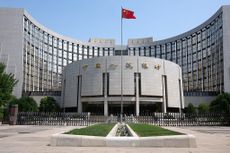
The clearest signal that China’s authorities are worried came from central bankers last week. The People’s Bank of China made it easier for banks to lend more money, by cutting the level of reserves they have to hold.

But if there’s one thing we should have learned from the financial crisis by now, it’s that central bankers don’t have magic wands. Also, even a ‘soft landing’ for China is likely to be bad news for companies or countries geared up to service China’s commodity demand.


MoneyWeek Trader logo

Claim your FREE report: The six-step game-plan for
spread betting profits


Australia is a prime example. A while ago I suggested that shorting the Australian dollar against the US dollar was one of the simplest ways to profit from a China slowdown. The Aussie peaked at around $1.10, and has fallen as far as $0.96 or so. Just now it’s back above $1, but I suspect it’ll fall below parity again.

In the short term, this will be influenced as much by global mood in the wake of the big European summit tomorrow. If markets get excited by a new ‘shock and awe’ decision from the Europeans, all the ‘risk-on’ assets, which include the Aussie, will rise.

But in the longer run, it looks too expensive at these levels. If you agree, you could use spread betting to make the trade (sign up for our free email MoneyWeek Trader to learn more about how to spread bet). But if you’re not keen to take that sort of risk, then another option is to buy the ETFS Short AUD Long USD (LSE: SAUP). The fund gives you exposure to a short position in the Aussie dollar.

I’d still suggest that you keep a close eye on its performance if you do decide to invest. Currency trades are always highly speculative and you should always monitor these more exotic forms of ETFs to make sure they do what you expect them to. But if you’re feeling adventurous, and don’t trust your timing skills, this could be a good way to dip your toe in the currency markets.

• This article is taken from the free investment email Money Morning. Sign up to Money Morning here .

Our recommended article for today

The best ways to play Europe’s banking crisis

As smart investors flee the Continent for safer markets, where should you be putting your money now? James Ferguson looks at the likely effects of a default, and picks the best stocks to tuck away.

Comments (4)

Share with
friends:

Comments

  • 1. Brian Anderson

    (08 December 2011, 03:34PM)  Complain about this comment

    European Community
    Having watched the recent programmes about the melting icecaps I can see similarities between the UK and the polar bears.
    However big the iceberg the bear should understand that it is drifting into hot water, will melt and drown him.
    Our Mr Cameron needs to understand that maintaning a small degree of control of a disolving asset is more danderous than getting off and taking your chances on your own.

  • 2. IJ

    (08 December 2011, 06:40PM)  Complain about this comment

    @ Brian Anderson

    The trouble is the UK is in worse shape than nearly all of the Eurozone countries. It has already drifted into hot water, no matter what happens to Europe.

  • 3. Mary

    (09 December 2011, 11:23AM)  Complain about this comment


    The European Union fractured today at a rancorous summit when 23 countries signed up to a new euro-plus group with Britain on the outside after David Cameron wielded his veto. Britain was left in a rump group including Hungary, Sweden and the Czech Republic -
    not so rump if it includes Sweden - they have the best economy in the EU don't they? albeit they are not a big economy they are better than the Germans pro rata?
    We need to trade more in other markets - we already trade a
    lot with US and we need to make better approaches with the BRIC
    countries/Far East generally.
    The EU is an expensive club/bureaucratic. And increasingly
    ruled by the ECB and Germany.

  • 4. wt

    (17 December 2011, 05:55PM)  Complain about this comment

    The proposals (actually dictat) to solve the eurozone problem are astonishing. Not only are some of the PIIGS countries probably unsuited to ever running a germanic style zero inflation currency but they are apparently not to be allowed a default to give them a clean start ( ie they will be required to put the toothpaste back in the tube first - which will mean cutting below the breadline) To cap it all the EU Commission, comprised mainly of PIIGS nationals whose accounts the auditors consistently refuse to pass, is to be charged with supervising their national budgets and tax collection. The likely under-table activity will be horrendous!

Leave a comment

This will be the name displayed with your comment.

This helps us verify comments are genuine. It will not be displayed anywhere on the site and is stored confidentially.

Please keep your comment within 1,000 characters and relevant to the main topic. We encourage healthy debate, but we don't allow insults or bad language. Anything off topic or unpleasant, we'll remove. Enjoy the conversation! Thank you.

captcha To prevent spam-related comments please enter the characters shown in the 'Captcha' box to the left.

By leaving a comment you accept our terms and conditions.


FREE - MoneyWeek's daily investment emailJohn Stepek

Our free daily email, Money Morning, is an informative and enjoyable analysis of what's going on in the markets. Written by our Editor, John Stepek, and guest contributors.
Sign up FREE to Money Morning here.

>