Why Taiwan is the most exciting market in Asia

By Cris Sholto Heaton Nov 02, 2009

Cris Sholto Heaton

Comments (12) Print this article

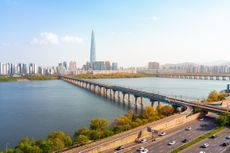
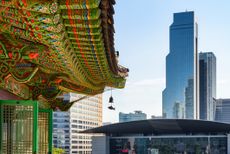
Taipei city skyline at dusk © Maurice Tsai/Bloomberg News

Taiwan's future is looking bright

The main problem with Taiwan's economy becomes apparent as soon as you land at Taoyuan airport. As you leave the rather spartan terminal, you look in vain for the signs pointing you to a metro link into the capital city, Taipei, before you remember that there isn't one. Your only option is a time-consuming bus or taxi ride to the local railway station, or directly into the capital.

A lack of investment has left Taiwan lagging behind much of Asia in recent years. The combination of the rise of China and the country's peculiar political situation has left this former tiger economy looking decidedly weak compared with peers such as Hong Kong and Singapore.

The good news is that this is very likely to change in the next few years. And that makes Taiwan one of the most interesting investment opportunities in the region …

How Taiwan became a modern economy

To understand Taiwan, you need to know something about its history and relations with China. When Chiang Kai-shek and the Kuomintang lost the Chinese civil war to Mao's Communists in 1949, they evacuated to Taiwan along with much of the country's wealth. There they sat for many decades, plotting ways to retake the mainland and trying to persuade the US government to help them.

That never happened. But while China suffered during the Great Leap Forward and the Cultural Revolution under its unhinged Great Helmsman, Chiang achieved what he'd failed to do for the whole of China, and rapidly modernised Taiwan's economy.

Following the now-familiar pattern, the island began as an exporter of low-cost goods such as textiles and moved up the value chain to be a centre of the global electronics industry today. GDP grew at an average of 8% a year between 1951 and 2007 (see figure 1 below), reaching a per capita level of around $31,000 at purchasing power parity, which adjusts for differences in the cost of living between countries (by comparison, the UK is around $36,000 and the US around $47,000).

Figure 1. Taiwan year-on-year real GDP growth rate, 1951-2010 (f)

Meanwhile Chiang's repressive dictatorship gave way to democracy in 1996 under Lee Teng-hui. Mainland China continued to regard the island as a renegade province; however commitments from the US to support Taiwan if it was attacked prevented any attempts to bring it back under control by force.

The rise of China came at a price for Taiwan

So far, so good. But as China industrialised, investment that had previously gone into Taiwanese industry began to flow to there instead. This wasn't just foreign firms; Taiwanese manufacturers began to relocate their factories to the mainland to take advantage of lower wages there. The profits they earned from this were often not repatriated to Taiwan but held offshore. Meanwhile, local investors have pulled their money out of the Taiwanese market in search of more exciting opportunities overseas.

The result: Taiwan has suffered a substantial net outflow of capital in recent years (see figures 2 and 3 below) and investment has slid to one of the lowest levels in Asia, above only the Philippines.

Figure 2. Net direct and portfolio investment flows into Taiwan, 1981-2009 (H1)

Figure 3. Taiwan net new investment relative to GDP, 1951-2010 (f)

Meanwhile, the loss of jobs to the mainland meant that wages stagnated despite the still-healthy headline growth in GDP (see figure 4 below).

Figure 4. Taiwan real monthly earnings (average across all sectors)

How Taiwan can turn this around

But just as China has been the problem, it's also likely to be the solution. Since the election of President Ma Jing-yeou last year, relations with Beijing have improved enormously. Direct flights between Taiwan and China now run regularly; previously you had to travel via Hong Kong. Restrictions on investments in both directions have been loosened and a free trade agreement is likely to be finalised within the next few months.

Better ties with China should help reverse the capital flows out of Taiwan for two main reasons. First, this will open the way to the next obvious step in the island's evolution; to become a specialist in research and development (R&D) and high-end manufacturing, and work in conjunction with lower-cost manufacturing in China.

This is what successful Taiwanese firms already do, so life will become easier for them. But foreign firms are also likely to set up bases in Taiwan for the same reason. The island still offers several advantages over China when it comes to highly-skilled work: education levels are better, English is widely spoken and the higher quality of life is more attractive for expatriate staff.

Second, there's likely to be significant investment from China into Taiwan now that restrictions have been eased. Part of this will be so that Chinese companies can use Taiwan as a skills centre in the same way as other firms – but political pressure from the Chinese government will also play a big part. When it comes to ways of persuading the Taiwanese to look more warmly on Beijing, bribery stands head and shoulders above any other option. China Mobile's agreement to take a 12% stake in Taiwan's number three mobile operator Far Eastone is an early indication of what we can expect.

Taiwan - the Asian Switzerland

But R&D is not the only way for Taiwan to evolve. Tourism is likely to be an increasingly important part of the economy. Taiwan is already popular with Japanese tourists, attracted by its hot spring resorts and spectacular mountains. But the big growth market is likely to be China. Visits have from there have soared (see figure 5 below) since the two governments agreed to allow mainland tour parties in 2008, helped by heavy promotion from the Chinese government, which again sees this as a way of improving ties.

Figure 5. Taiwan's Chinese tourist boost

But in the longer run, I think there's an even more interesting angle to this. The same traits that make Taiwan attractive for tourists mean it has the potential to become the Switzerland of Asia – a home for the wealthy, especially the newly rich of China.

This influx would benefit the whole economy, but would have an especially strong impact on property prices, just as we're seeing in Hong Kong at present. (So far, mainland Chinese individuals are not allowed to buy residential property, but that seems certain to change in due course.)

There are several key criteria for this possibility to reach its full potential. One is that Taiwan needs to have a Swiss-style pristine environment. A few years ago, that would have sounded unlikely; the island had severe pollution problems from decades of industrialisation. But efforts to clean up the air and rivers are paying off; during my latest visit, Taipei seems no more polluted than London, and conditions are starting to look pretty good in comparison with other parts of Asia.

Secondly, the country will need excellent infrastructure. And despite some obvious gaps such as the airport link, huge progress is being made here. A new high speed rail service, based on Japan's Shinkansen, or bullet train, now runs from Taipei in the north to Kaohsiung in the south. While the company that runs it is experiencing the usual Eurotunnel-style financial problems typical of these projects, there's no doubt that it's an impressive system that should deliver long-term benefits. The 200-mile journey takes just 90 minutes, down from 4.5 hours before.

Elsewhere, Taipei built an efficient metro system from scratch in the 1990s and is still extending it; by 2013 this will finally include a direct link to the airport. Other areas have further to go, but progress is being made; Kaohsiung opened its first two metro lines last year.

Coming to terms with China

The last step will probably take the longest: settling the cross-straits relationship. China has no apparent desire to exercise direct control over the island (the one country-two systems formula used for Hong Kong and Macau was originally developed as a proposal to Taiwan), but it cannot accept Taiwan being officially independent, not least because this would encourage independence movements elsewhere in China.

The majority of the Taiwanese population do not want to be governed by Beijing, even under a one country-two systems solution. At the same time, support for full independence is generally low, partly because it would inevitably mean war and partly because many still feel some ties to the mainland.

In short, the current situation of de facto independence seems to suit both sides at the moment, but in the long run a formal peace agreement will be necessary. The tricky part will be coming up with a framework that's acceptable to both sides and allows both to claim to have secured their goals. How this will be done is impossible to say, but recent trends suggest the desire to wrap things up is there. Indeed, President Ma has said he would like to see some kind of deal while he's in office.

Once this is done and the benefits that better ties with China will bring are clear, attitudes towards Taiwan are likely to change a lot. Indeed, I think there's a significant chance of a major Taiwan bubble in the next few years as investors latch on to this story.

Conversely, the main risk with investing in Taiwan is that this doesn't work out and relations deteriorate again. The worst-case scenario, while extremely unlikely, is war; given the US commitment to protect Taiwan, this would have global consequences.

How to invest in Taiwan

So if you find the Taiwan story as intriguing as I do, what are the options for investing there? There are six exchange-traded funds (ETFs) listed around the world. Five of them track the MSCI Taiwan index, while the other holds the 50 largest stocks in the market. Providers include iShares and Deutsche Bank (see the table below for a full list). You should be aware however that buying these would give you a heavy weighting towards technology (around 60%).

Foreigners are allowed to buy Taiwanese shares, but it's not the easiest exchange to access, which is the main reason it's still classed as an emerging rather than developed market. Consequently, few brokers currently offer Taiwanese stocks. UK investors could try Redmayne Bentley or look at opening an account with Hong Kong online broker Boom (I'll take a look at which brokers give you access to which markets in next week's email).

This would also let you buy the handful of custom ETFs listed in Taiwan, which could be useful if you want exposure to specific sectors. But you might want to wait on these, since it's possible that Taiwan ETFs will become significantly easy to access in the near future. Following recent rule changes, one Taiwan ETF has already cross-listed in Hong Kong and more could follow.

Elsewhere, there are two US-listed Taiwan investment trusts. The Taiwan Greater China Fund (NYSE: TFC) invests in Taiwanese companies that derive a large proportion of their profits from operations in China, on the basis that higher corporate governance standards and transparency in Taiwanese firms make this a better alternative to investing directly in China. Independently managed, it has around $70m in assets under management and trades at a discount to net asset value of 8.5%. The total expense ratio last year was 2.4% of assets under management.

The Taiwan Fund (NYSE: TWN) has a broader focus on the overall Taiwanese economy. Managed by HSBC, it has around $275m in assets under management and trades at a discount to net asset value of 9%. The TER was 1.7% of assets under management.

There are also few Taiwan-specific unit trusts. Not all of these will be available to investors in all regions, but two that should be widely accessible are from Fidelity and JP Morgan. As ever, if you're investing in a unit trust, you should look at doing so through a funds supermarket to avoid the indefensible 5% entry fees that the industry still somehow gets away with.

Table: Selected Taiwan funds

NameTERListed
Axa-BNP EasyETF TSEC Taiwan 50 0.60% FR, FR$
Commerzbank ComStage MSCI Taiwan 0.60% DE
Deutsche Bank x-trackers MSCI Taiwan 0.65% CH, DE, FR, GB, GB$, HK, IT, SG
Fubon FTSE Taiwan Technology Tracker 0.44% TT
Fubon MSCI Taiwan 0.34% TT
Fubon Taiwan Eight Industries [ex Tech, ex Finance] 0.44% TT
Fubon Taiwan Finance 0.44% TT
iShares MSCI Taiwan 0.74% CH, DE, FR, GB, GB$, IT, NL
iShares MSCI Taiwan 0.63% AU, US
Lyxor MSCI Taiwan 0.65% CH, FR, HK, IT, SG
Polaris P-Shares MSCI Taiwan Financials 0.50% TT
Polaris P-Shares S&P Taiwan Custom China Play 50 0.49% TT
Polaris P-Shares Taiwan Dividend Plus 0.48% TT
Polaris P-Shares Taiwan Electronics Tech 0.46% TT
Polaris P-Shares TSEC Taiwan Non-Tech 50 0.50% TT
Polaris Taiwan Mid-Cap 100 0.48% TT
Polaris Taiwan Top 50 0.38% HK, TT
Closed-end funds
Taiwan Greater China Fund 2.40% US:TFC
Taiwan Fund 1.70% US:TWN
Unit trusts/OEICs
Fidelity Funds Taiwan A (min $2,500) 2.06%
JP Morgan Funds JF Taiwan A (min $2,000) 1.90%

This article is from MoneyWeek Asia, a FREE weekly email of investment ideas and news every Monday from MoneyWeek magazine, covering the world's fastest-developing and most exciting region. Sign up to MoneyWeek Asia here

Comments (12)

Comments

  • 1. D McCarthy

    (02 November 2009, 05:39PM)  Complain about this comment

    An excellent piece of research, well stuctured and clearly presented, anticipating and answering most of the questions that came to mind. Thank you.

  • 2. Roger Baker

    (03 November 2009, 11:03AM)  Complain about this comment

    You might have mentioned that a number of leading companies offer US ADR quotations with NYSE. Two I currently hold in this way are:
    Chungwa Telecom (NYSE:CHT)
    Siliconware Precision Industries (NYSE:SPIL)
    Taiwanese stocks also offer good dividends

  • 3. Aston Lloyd Research

    (03 November 2009, 12:25PM)  Complain about this comment

    It is amazing to know how quickly Taiwan bounced back - with a economy that relies heavily on trade it was booming between 1960s and 1990s, but also plummeted fast since the credit crunch. Its improving relations with China (since Ma Ying-jio took office) also helped a lot.

    Here's a related article: http://www.astonlloydresearch.co.uk/index.php/2009/04/are-the-tigers-from-hong-kong-south-korea-singapore-and-taiwan-still-roaring/

  • 4. Cris Sholto Heaton

    (03 November 2009, 02:00PM)  Complain about this comment

    Thanks for bringing that up Roger. Yes, there are some good Taiwanese companies with US ADRs. In addition, there are some with listings on the London International section, although liqiudity varies. A few also have listings or subsidaries in Hong Kong, which is much more widely offered by UK brokers than Taiwan.

  • 5. David Carlyle

    (03 November 2009, 02:34PM)  Complain about this comment

    Hi

    I would like to invest in Taiwan throug a stocks and shares ISA.

    Please could you [someone] advise fund names throgh which I can do this?
    Thanks

  • 6. Cris Sholto Heaton

    (04 November 2009, 03:38PM)  Complain about this comment

    Hello David,

    UK ETFs and investment trusts can be held in an ISA. Non-UK listed stocks, ETFs and investment trusts/closed-end funds can be held within an ISA as long as they are traded on an HMRC-recognised exchange and your broker permits it (most brokers that offer foreign stocks do, but not all).

    The list of recognised exchanges is on the HMRC site here: http://www.hmrc.gov.uk/fid/rse.htm (Tables 1 & 2). While most obvious exchanges are recognised, there are some exceptions (including Aim - so you can't hold an Aim-listed investment trust within an ISA).

  • 7. Cris Sholto Heaton

    (04 November 2009, 03:41PM)  Complain about this comment

    Regarding unit trusts, these can also usually be held within an ISA. The problem is whether the provider that you use to buy unit trusts and have an ISA with offers that particular fund. Looking quickly at Fidelity Funds Network and Hargreaves Lansdown, the two big fund supermarkets, as far as I can see each only offers one of the unit trusts I mention.

    I have heard good things about Brewin Dolphin in terms of offering unit trusts that many others don’t for ISAs, though I haven’t used them myself. However, they will be more expensive since they’re not a discount broker.

    Hope this helps
    Cris

  • 8. Richard

    (06 November 2009, 03:41PM)  Complain about this comment

    Cris

    In your August article - Why Vietnam looks a better bet than China or India - you were not very positive towards Taiwan but positve towards Vietnam.

    Where do you sit now on the two?

  • 9. Ruddiger

    (09 November 2009, 04:51AM)  Complain about this comment

    Taiwan as the Switzerland of Asia?! Come on. Why would a rich Asian businessman want to put all of his wealth into a country that is at risk of invasion? Plus, Taiwan's banking and financial regulations are so strict and they're never going to untangle them. It's an unpredictable nightmare dealing with the authorities.

    As for Taiwan as a destination for Chinese tech investment... Well, I doubt it. I like your argument but I think that Beijing will try to keep all the glory for themselves as their manufacturers move up the value chain.

  • 10. Cris Sholto Heaton

    (09 November 2009, 09:28AM)  Complain about this comment

    Hi Richard,

    The August piece wasn't intended to be negative on Taiwan - sorry if that was unclear. I referred to the 1989 bubble as an example of what usually happens afterwards - that's resolved now. I also mentioned separately the landslide hurting Ma's popularity, but that was more of a short-term political risk than a long-term problem. My long-term views haven't changed.

    Versus Vietnam, I think they're two very different types of investment. Taiwan is a turnaround story in a developed economy, but even if it doesn't turn around, the downside is limited (barring the risk of a war with China). Vietnam is at a much earlier stage of development. It has enormous potential, but still needs drastic reforms, many of which the government has been slow about implementing (for example privatisations and breaking up the old state-controlled conglomerates). It's a higher risk investment and they have different roles in a portfolio.

  • 11. Cris Sholto Heaton

    (09 November 2009, 10:00AM)  Complain about this comment

    Hi Ruddiger,

    Yes, those are fair counterarguments, but I'm optimistic it will go the other way.

    The invasion threat hangs over Taiwan, which is why I mentioned a settlement as one of the factors that would shift its prospects. That said, given the American commitment to protect it, the risks from that go far beyond any investments in Taiwan.

    While an influx of rich businessmen would certainly help the local financial services, I wasn't suggesting that Taiwan is going to become a Switzerland in that sense. I'd be very surprised if it evolved into much of a financial services centre, given the headstart that HK and SG have - and as you mention, government policies that don't favour that at all. But when it comes to rich mainlanders buying property there as a part-time residence, I think there's a lot of potential.

  • 12. Cris Sholto Heaton

    (09 November 2009, 10:03AM)  Complain about this comment

    Agreed, Beijing will try to move its industry up the value chain as soon as possible. But there is a limit to how quickly it can move (it can't even shift low-value manufacturing out of the coastal provinces and inland) and there’s a lot that Taiwan offers that it’s hard to find in China.

    There’s potential for at least three types of inbound investment:
    a) foreign firms - driven by what Taiwan offers in terms of skills, costs and proximity to China
    b) Beijing-directed investment - basically bribery as I mentioned
    c) both Chinese firms and Taiwanese firms with money held off the island making the best business decisions - in particular, the Fujian-Taiwan links. Fujian is probably the most entrepreneurial and private business-focused province in China and under better cross-straits relations, there's even more potential for investment that focuses on making the most of both locations.

    Now we need to see if that materializes and the political climate continues to improve.

Leave a comment

This will be the name displayed with your comment.

This helps us verify comments are genuine. It will not be displayed anywhere on the site and is stored confidentially.

Please keep your comment to within 1,000 characters, and relevant to the main topic. Comments not directly on topic will be removed.

captcha To prevent spam-related comments please enter the characters shown in the CAPTCHA box to the left.

By leaving a comment you accept our terms and conditions.


FREE - MoneyWeek's daily investment emailJohn Stepek

Our free daily email, Money Morning, is an informative and enjoyable analysis of what's going on in the markets. Written by our Editor, John Stepek, and guest contributors.
Sign up FREE to Money Morning here.