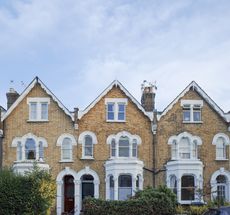
Why I still prefer gold to houses

By Dominic Frisby Jun 01, 2010

Dominic Frisby

Share with
friends:

Comments (24) Print this article

We were astounded by the number of reader responses to my Money Morning piece last week on the ratio of UK house prices to gold. In terms of readers' comments, it broke the record, previously held by Merryn for her piece on the minimum wage. I even had a irate email from my father on the subject. Not all the comments were particularly polite, but they did raise a number of legitimate concerns which I want to address here.

The idea was to look at the performance of the UK housing market relative to gold since 1968, and to show that from a peak in 2005, the average house price is down some 70%, even though in nominal sterling terms it is only sitting roughly 10% off its peak.

A number of readers seemed to think that making this point means that Moneyweek has somehow turned bullish on the property market. Not so. Everyone at Moneyweek has their own opinion, of course. But our editor-in-chief Merryn Somerset Webb is still a declared bear (read her latest thoughts on the subject here) and for my part I would argue that now is perhaps the worst time in history to be buying property.

Recommended reading

Property prices have only held up because interest rates have been suppressed to artificially low levels by policy-makers who appear to have decided that saving the banks, credit and housing markets is more important that saving the currency. Indeed devaluing our currency seems to be one of the strategies - albeit an undeclared one - for paying off our national debt.

But even in this environment of low rates, transaction volumes are below the levels set in the 1989-94 crash. House prices bear no relation to earnings, which, largely speaking, are flat or falling. They bear little relation to rental yield. Credit is tight. Estate agents report that more and more property is coming to market - and this is particularly the case since the abolition of HIPs. The threat of rising rates is lurking around the corner like a drooling bear - the OECD thinks UK rates should hit 3.5% next year. And of course the proposed rise in CGT, if it materialises, is going to send a virtual tsunami of buy-to-lets and second homes onto the market.

I think its pretty to hard for anyone to argue that I am somehow bullish about property, given the above.


Special FREE report from MoneyWeek magazine: When will house prices bottom out - and how will you know?

  • Why UK property prices are going to fall 50%
  • When it will be time to get back in and buy up half price property

A number of readers also questioned the legitimacy of measuring one market in terms of another. You buy and sell a house in pounds, they say, so that is all you really need think about. But comparing the ratios between markets is a widely-practised and, in my view, useful strategy that can help us to gauge what is cheap and what is expensive in relative terms. Commonly used ratios are the share price-to-earnings ratio; rental yields vs house prices; wages to house prices; the Dow-to-gold ratio; commodity prices relative to commodity-producing companies; commodities vs stocks; stocks vs bonds, and so on. All these comparisons can serve a helpful purpose. Yes, the house-price-to-gold ratio doesn't take rental income into account but it is still an interesting gauge of relative value. And, given that there are so many people, many of them regular Moneyweek readers, that have rolled their wealth out of property and into gold, it is an extremely relevant one to our readership.

Gold is in a bubble, said others, so the comparison is invalid. Gold may or may not have got a little ahead of itself, but it is not in a bubble - not yet anyway. Merryn wrote on this subject just last week as well. To put things into perspective, here we look some recent bubbles. Below is a chart which overlays the Nasdaq bubble, the US housing market bubble and gold - you can see that gold has a way to go in its cycle before it hits full-blown bubble territory.

Others argued that there is no point comparing housing to something as useless and inanimate as gold; you can't live in gold bars, after all. I'm not going to get into the what's-the-use-of-gold argument here - if you read Moneyweek, you will know how we think about it - save to say that it is in part because of gold's relative industrial uselessness that it has so served so well as money for thousands of years. Unlike modern fiat currency, it is, broadly speaking, beyond the power of governments to debase (you can chip coins, but that is a different matter) and so it preserves its value.

That's not the case with Mars bars, something several readers suggested would be as much use as gold for measuring against house prices. I do not have the actual data. But, from memory, when I was a child in the 1970s, a Mars bar cost 5p. It now costs somewhere between 50 and 60p, depending on where you shop. That's a 1000% rise. That's not because Mars bars have appreciated in value, it is because modern money has lost and keeps on losing its purchasing power. It is the great fraud of our time. I think it is that stark revelation that upset so many readers.

These are incredibly frustrating times. A whole generation has been alienated by the absurdly out-of-reach property prices in this country. Many, having rightly identified that property was in a bubble, either stayed out or got out, only for the long-overdue correction never to fully materialise. Meanwhile, they see the purchasing power of their money evaporate, and it seems they will never be able to buy anything unless they cripple themselves with debt. This is all an unfortunate consequence of the modern fiat system of money and credit. It causes malinvestment, it creates rampant asset price inflation, booms, bubbles and, eventually, busts.

In response to all this there isn't much we can do other than move our wealth into stronger foreign currencies or an asset, such as gold, that a government can't debase. And there might be another opportunity to do that coming up in the next few months. There is a lot of turbulence dead ahead in global markets. Gold may well sell off in the carnage. If it does and we get our usual summer low, take advantage.

Comments (24)

Share with
friends:

Comments

  • 1. sasi

    (01 June 2010, 03:04PM)  Complain about this comment

    I agree with you dominic.I have been saying this too all my friends who own a house here.Iam a economic migrant from what they call as a third world country full of slums, beggars,snake charmers-India(which is what many western peoples perception is). If i have bought a house in 2004 Iam at a loss if i compare the value in Indian rupee terms.Forget gold.Even if you compare the value of pound against a currency of a poor country iam at a loss.And if i look at against something regarded as valuable throghout history ie gold iam at a terrible loss.

    so the message is
    .house prices have really depriciated
    .Pound is just becoming a worthless piece of paper.
    .i would have been better of if i have invested in India or in gold.

    And the worrying thing the UKeconomy doesnot seem to be growing >3% at its best, in the next few years.
    who it is only an illussion even if the house prices go up

  • 2. sasi

    (01 June 2010, 03:15PM)  Complain about this comment

    And one thing everybody needs to realise is that England is a wealthy country in a way because of gold.Everyone knows that there is nothing in England in terms of natural resources/agricultural production .Everything is imported from outside. You can realise that when you go to any supermarket and look around where things are coming from.May be the only UK originated products are Milk,British Beef(not sure how true),and potatoes. British empire came after the europeans went and started looting all over the world looking for gold and spices. .So we cannot just say gold as a useless metal.It value is not decided by who is power, etc etc .It is priceless.
    Sometimes if somebody tells us a bad news the initial phase of reaction is Denial and that is what happening now.
    The comparison with Mars Bar is very interesting.

  • 3. vs-trader.blogspot.com

    (01 June 2010, 04:17PM)  Complain about this comment

    There must be a reason for even when IMF is openly selling large blocks of GOLD, not only the price is rising BUT also people in the know (read central banks and governments) are building up the stockpile. Why? What do they know which we don't?

    http://www.zerohedge.com/article/imf-sells-151-metric-tons-gold-april-1521-tons-sale-remaining-russia-keeps-waving-it

  • 4. Coolook

    (02 June 2010, 09:24AM)  Complain about this comment

    You are absolutely right, Dominic. As the late R. Burns put it: "facts are chiels that winna ding".

    The many house owners who protested "too much" about your article only exposed the fact that they all know, deep down, that their piles of bricks are much overvalued.

    They are right to be worried. Only when first time buyers can afford to get on the bottom rung of the property ladder will we have a sustainable property market. That is a fall of 25% from here.

  • 5. Aldo

    (02 June 2010, 11:48AM)  Complain about this comment

    I sold my house in 2003, sensing prices had peaked and anticipating "more realistic" rising interest rate policy would stop or at least slow price increases. But the drug of low interest rates was too enjoyable, our masters let it run until the addiction turned disastrous/fatal. Now, with zero interest, a depreciating currency, and unrealistic stock market, disaster seems imminent, and gold the only insurance available.

  • 6. Maestro

    (02 June 2010, 12:47PM)  Complain about this comment

    Within sight of the sea I found that the best analogy to assist understanding of what is happening in respect of relative values of Gold Houses and paper money is asking my fellow drinkers what conculsion would they draw if they saw a golden rock which appeared to be growing out of the water.

    Most thought it would be tide going out.

  • 7. Daniel A.

    (02 June 2010, 12:48PM)  Complain about this comment

    I think these arguments are all now academic. It is entirely clear that the whole world economy has been built on financial quicksand. The unprecendented growth was a fudge.

    Government's are now desperately throwing everything they can into the system, but they are doomed to failure because the system is insolvent and at some point, it will tank.

    When computerization enabled financial institutions to conjur up money on screens for governments, businesses and consumers to spend, the game was up. It was only a matter of time before we reached this point. There is no way out of this mess other than the total collapse of fiat money and that will lead to the biggest challenges since the Industrial Revolution. Gold in that context will matter little.

  • 8. glen h

    (02 June 2010, 01:02PM)  Complain about this comment

    i think i know why there was so much indignation yesterday. it wasn't a cross product comparison, it wasn't the revelation that sterling is worth less, it was the word muppet. and i think people thought they were being called one?

  • 9. Charlesdb

    (02 June 2010, 01:28PM)  Complain about this comment

    How do you safely store gold? Why should I trust a bank, or an owner of a Gold vault, or The Perth Mint? Ditto Gold bullion ETF's. How do you know the Bank hasn't lent out your Gold? Hedge against inflation? $850 per oz in the 1970's, $1200 today. No hedge there 'cause timing is all. History tells us that every mania is accompanied by fraud. Gold is no exception. I read that banks were charging customers for storage, when they had actually lent out the gold itself. And how do you know how Gold will behave when Armageddon comes. My guess is that the rush to sell will cause a price crash. The fact is, no one knows.

  • 10. msmoneywise

    (02 June 2010, 02:11PM)  Complain about this comment

    Coming from a culture that buys gold both for investment and ornamentation, I own gold and I enjoy owning it. Since I buy gold jewellery that is 22k, it is pure enough to hold and increase its value over time. I recently read your article about losing over £40k if you owned a house, and this prompted me to sell my house while the prices were still relatively good. In fact, my house sale is going through now. I would still want to invest in property, and would probably look at buying again, in London. However, perhaps I should read your free report before I do so!!

  • 11. Jeff

    (02 June 2010, 04:18PM)  Complain about this comment

    In 1989 I left school and started on a construction site. The executive new houses were priced at about £180000. While looking through a local newspaper, last week. I noticed on of the houses was up for sale for £330000. When you work it out that's a paltry 2.9% yearly growth. I know the market had peeked in 89 and new houses have a premium, but it's still makes you think...Btw the same amount in gold would now be worth well over £500000.

  • 12. JAW

    (02 June 2010, 05:32PM)  Complain about this comment

    To understand property price rise and falls it is necessary to analyse the components of a property. A house consists of the land it is built upon, construction materials, labour costs, and builder's profit.

    For the average £168,000 UK house materials cost about £45K and labour £40K varying little in boom and bust. What does vary is the builder's profit and building land price. Builders aim for £30 profit per house, currently lucky to get £10-15K. Building land in the recent boom reached £70 -100K/plot but has fallen 40% to £45-65 (national builders prices).

    You can't change the building costs only the land and profit costs. If you want lower house prices governments have to control land prices, say to max twice the agricultural price. Current agri land is about £6K per acre. At a density of 8 houses per acre this could be £1.5K per plot? If plot prices were controlled and cheap, house prices could reduce by £50K to average £118,000, becoming affordable by most under 30's?

  • 13. Gerald C. FitzGerald

    (02 June 2010, 06:55PM)  Complain about this comment

    I remain, like Mr Frisby, a bull of Gold. The fact remains though that he was predicting a price of $1400. by the Spring and and it has so far gone not very much higher than $1200. Is he prepared to stick his neck out with another such predicton?

  • 14. Jim

    (02 June 2010, 11:03PM)  Complain about this comment

    Like the comparison price for the mars bar.

    It got me thinking about when I started work in 1969, I earned £14 a month, at the present time I take home approx.£1000 a month, methinks I'm getting old!

    Sounds like the best investment for any mothers having babies is to buy gold for them to use when they will want to buy there own house.

  • 15. Dodge

    (03 June 2010, 11:08AM)  Complain about this comment

    I find the comparison between gold prices and the NASDAQ/US housing bubbles dubious. The NASDAQ could easily have peaked at a completely differently value, so how is the peak value we actually got useful?

    What I'd like to hear is an explanation of this conundrum: if modern economic theory says that gold is useless and impossible to value, why do modern central banks hold it all?

  • 16. Housing Bear

    (05 June 2010, 10:51AM)  Complain about this comment

    I prefer gold to housing for the time being!

    According to www.goldprice.org, Gold has appreciated by 36% against GBP in the last 1 year, and by 255% in the last 5 years.

    By contrast housing has not appreciated greatly, and is very illiquid, especially at the moment.

    The only trouble is that gold is very volatile, as we all know, and will probably one day crash!

    I am trying to figure out away of hedging my gold, in the event of a crash, using spread betting - but this is more complicated than it at first appears because Gold is priced in USD, so it requires a hedge in two contacts: Gold/USD and GBP/USD. Any ideas anyone? Spread betting is not my strongest point!

  • 17. Brian Darby

    (05 June 2010, 11:02AM)  Complain about this comment

    Valuation on the basis of a "bubble" in gold is like comparing the
    "bubble" in Housing.

    Clearly, both are bubbles- if gold (as in the last 1980's) drops in value by 30% /40%does that mean the house prices go up in value at the same rate??


  • 18. Timbo

    (06 June 2010, 02:42AM)  Complain about this comment

    Good contrarian comments on gold from Karl Denninger:

    http://market-ticker.denninger.net/archives/2361-Listen-To-The-Hucksters,-Lose-Your-Ass.html

    Seems his views aren't too popular with goldbugs.

  • 19. Grifter

    (07 June 2010, 09:43AM)  Complain about this comment

    I sold a house in 2005 thinking that growth was unsustainable and invested the equity in bullion which has worked out well. Two weeks ago I got married, and my wife and I, both professional graduates are now looking to move abroad. We have over 100K as deposit and yet a look in any estate agent's window reveals nothing of value offering room for a family. (Imagine what it's like for recent graduates emerging into the current job market with 20-30K in debts!) We would still have to take on a mortgage 4-5 times income just to get a two bedroom house. I don't want to take on over 150K in mortgage when interest rates could skyrocket in future to cope with inflation. To add insult to injury it seems the government now wants to take an increased chunk of my invested deposit money by increasing CGT. The UK no longer offers us a future so we are taking our money out and going somewhere that does!

  • 20. Michael D

    (07 June 2010, 12:33PM)  Complain about this comment

    Dominic,

    exceptioanly well written article which is true to the bone. This parameter really does indeed reveal the truth. Governments may be able to sustain bubble valuations in assets like property in the UK over the medium term in paper money like the GBP BUT the real weighing scale is against real money like gold. I agree 99% with your article the other 1% - I beleive average Uk house prices will fall not to 50 ounces of gold but nearer 10 ounces over the next 10 years. What we are confronted with now is much much worse than anything previously experienced in the past 200 years.

  • 21. IJ

    (07 June 2010, 01:51PM)  Complain about this comment

    I agree entirely with Charlesdb. In light of his comments, surely it's time to debunk the myth that gold is "nobody else's liability".

  • 22. alex

    (08 June 2010, 09:23AM)  Complain about this comment

    As I've said before if the Armaggedon the Gold Bugs fear ever does materialise a cross bow and a large stock of mars bars will be much more useful than a small amount of metal with no obvious use.

  • 23. Grifter

    (09 June 2010, 11:12AM)  Complain about this comment

    Dear IJ and Charlesdb

    How to make Gold (or any other portable asset for that matter) no-one else's liability.

    Map, shovel, remote carribean island, old watertight chest, dark moonless night! Nuff said.

  • 24. Jim

    (18 June 2010, 09:19PM)  Complain about this comment

    Warren Buffett puts it "be fearful when others are greedy. Be greedy when others are fearful."

    The above statement couldn't apply to gold could it?

Leave a comment

This will be the name displayed with your comment.

This helps us verify comments are genuine. It will not be displayed anywhere on the site and is stored confidentially.

Please keep your comment within 1,000 characters and relevant to the main topic. We encourage healthy debate, but we don't allow insults or bad language. Anything off topic or unpleasant, we'll remove. Enjoy the conversation! Thank you.

captcha To prevent spam-related comments please enter the characters shown in the 'Captcha' box to the left.

By leaving a comment you accept our terms and conditions.


>