How panic in Europe could hurt UK house prices

By Associate Editor David Stevenson Sep 23, 2011

David Stevenson

Share with
friends:

Comments (37) Print this article

It's safe to say that markets didn't think much of Operation Twist.

Yesterday was brutal. The FTSE 100 plunged 4.7%, while French shares fell 5.2% and the German Dax lost 5%.

The similarities to 2008 and the Lehman Brothers collapse are growing by the minute. Shares, commodities, gold – everything fell as investors ran to the 'safety' of the US dollar.

And in the background, there's another Lehman-era disaster brewing.

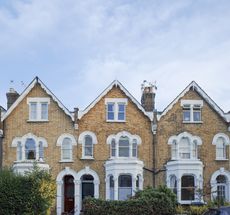
One that could hit a market very much closer to most British people's hearts: the UK housing market.

The Bank of England may lose control of interest rates

British house prices have been remarkably resilient following the global economic crisis. Sure, in 'real' (inflation-adjusted) terms, they've fallen a fair bit from the peak, outside London. But they remain hugely expensive on a historic basis.

What's kept them propped up? Bulls will go on and on about supply and demand. But in reality, it all comes down to interest rates. With the Bank of England slashing the bank rate to 0.5%, many homeowners have seen the cost of their mortgages plunge to unheard-of lows. That's enabled people to hang on to homes they might otherwise have been forced to sell.

Surely with the current carnage in the markets, we can at least rely on interest rates to stay low? Certainly the Bank of England has no plans to hike rates any time soon. Indeed, a fresh bout of quantitative easing seems far more likely.

But it's not just down to the Bank. The cost of home loans may be bottoming out. And it all stems from what's going wrong in the European banking system.


Lead indicators for Britain's economy

Gold/silver ratio:
A warning for the markets
Where to next for
UK house prices?
Is Britain's inflation
about to take off?


Counterparty risk is making a comeback

We wrote recently about counterparty risk. In short, it's the risk that you make a deal with someone, and they then fail to hold up their end. Like backing a winner at the races, and then finding the bookie has done a runner when you go to collect your winnings.

Counterparty risk becomes a serious problem when banks start to get worried about lending to each other. And that's what's happening in Europe now. Small wonder. The International Monetary Fund (IMF) has just warned that European banks are sitting on a staggering €300bn of losses from the eurozone sovereign debt crisis. Would you want to lend to anyone who might be exposed to that sort of loss?

As the IMF says, this is putting the financial system in its greatest danger for years. For one thing, these losses will prove very nasty news for Europe's economy. Interbank lending is already falling. If the carnage in other markets continues, it'll probably freeze up even more.

That'll make credit even harder for businesses and households to get hold of. And this is where the interest rate risk we were talking about earlier comes in. This chart makes the point (it looks complex, but bear with me – it really isn't).

Ten-year swap rates between Germany and the eurozone overall.
Source: Bloomberg

The purple line is the key. This is the gap in ten-year swap rates – which you can read about here – between Germany and the eurozone overall.

What does that mean? Germany is seen as the safest country in the EU. So the higher the purple line goes, the more worried markets are about the state of the rest of eurozone. As jitters over Greece, Portugal, Ireland, Spain and Italy have grown, the Germany/euro swap rate gap has climbed steadily. In fact it has now risen to the levels it reached when Lehman went bust.

And here's the nub of the problem – this also affects the UK.

The blue line on the chart is the three-month London interbank rate (LIBOR) at which banks lend sterling to each other for three-month periods. During the last two months in particular – as you can see clearly on the chart – it has been pulled higher by the purple line. That's despite the fact that the Bank of England rate (the black line) hasn't budged from 0.5%.

Why now could be a good time to fix your mortgage

In other words, almost every day, UK banks are being forced to pay more to borrow in the money markets.

And if banks have to pay more to borrow money, they'll have to charge the likes of you and me more to borrow as well.

Already, building societies are only lending what they can attract as retail deposits. They aren't borrowing in the wholesale money markets at all, Ray Boulger of John Charcol tells Lorna Bourke at Citywire.

"If, or when, Greece defaults and comes out of the euro, banks will be wary of lending to each other and there'll be a shortage of mortgage finance", he says. Lenders will push up mortgage costs  – "first because they can, and second to stop being swamped with business." 

Mortgage lending is already tight. If it tightens any further, then that'll make it even harder for the housing market to defy gravity.

As Mark Johnston of Mortgage News notes: "two-thirds of UK home owners have a variable rate mortgage, meaning eight million households would pay more when interest rates rise". According to the Daily Mail, a rate rise of just 0.5% would increase monthly repayments on a £150,000 variable rate mortgage by £43 a month or £516 a year.

That could tip many already cash-strapped home owners over the financial edge. In turn this could lift repossessions and forced sales – and drive down house prices.

It also points to one clear conclusion for existing homeowners. If you currently have a floating rate mortgage, this could be a good time to take advantage of a cheap fixed rate product while you still can. We have more on this topic in the latest issue of MoneyWeek magazine, out today: Is now the time to fix your mortgage? If you're not already a subscriber, get your first three copies free here.

Our recommended article for today

An unloved small-cap property company

As an investment idea, owning shares in UK property companies is admittedly on the contrarian side. But this small-cap property company is making a healthy return on its portfolio and has good prospects for the future, says Tom Bulford.

• This article is taken from the free investment email Money Morning. Sign up to Money Morning here .

Comments (37)

Share with
friends:

Comments

  • 1. alex

    (23 September 2011, 10:56AM)  Complain about this comment

    "they remain hugely expensive on a historic basis." ......er no they aren't.

    The average house is selling for around £160k. The average person earns approx £26,000.

    So the average house, costs around 3 times the average combined income of a couple.

    ( this being the 21st century it is safe to assume that the woman will now work, even if she has children, I would argue that the old 2.5 ratio is obsolete as it assumed women automatically gave up working when they had children. )

  • 2. khards

    (23 September 2011, 11:11AM)  Complain about this comment

    "( this being the 21st century it is safe to assume that the woman will now work, even if she has children, I would argue that the old 2.5 ratio is obsolete as it assumed women automatically gave up working when they had children. )"

    I don't think so, have you not read the news recently about the cost of child care?
    Yes, with the mother working they may have more money coming in, but more going out and since mortgages are NOW BASED ON AFFORDABILITY and income I don't see the golden ratio changing for couples with children.

    At the end of the day it is whether you can afford a mortgage that is 6x your wages, not factoring increased inflation history clearly shows that CURRENT PRICES ARE NOT SUSTAINABLE.

  • 3. Exile

    (23 September 2011, 11:14AM)  Complain about this comment

    Alex.

    If you actually researched the matter then you would find that women still worked in the 20th century as well. The main growth in the number of 2 income households occured during the 60's and 70's. The are not too many more 2 income households now as compared to the early 90's

  • 4. DomCobb180

    (23 September 2011, 11:15AM)  Complain about this comment

    Alex, 2.5 times a joint income of 52,000 is 130,000 - and how many women earn as much as their partners. Still look massively overvalued to me - if interest rates were set proprtly (real interest rates) to ensure inflation was controlled I'm sure house prices would be a lot lower.

  • 5. alex

    (23 September 2011, 11:42AM)  Complain about this comment

    Sio Excile & Kahrds what do you think people who are renting use to pay the rent..... fairy dust? Rents are to/slightly higher than mortgage payments at present, and yet people pay the rent.

    £150,000 mortgage will cost a couple about £800 a month on a repayment basis.

    You are telling me that a couple with over £3000 a month coming in cannot afford that? Given that if they don't own already they will be paying that in rent anyway.

  • 6. Tim

    (23 September 2011, 11:44AM)  Complain about this comment

    The article states that the bank rate is not going anywhere, i.e. staying at 0.5% for the forseeable. Is it not the case that pretty much all residential mortgages on floating or discount rates/trackers, track the bank rate and not LIBOR?

    If so, the end of the article is contradictory, because "if you currently have a floating rate mortgage" - you don't need to swap to a fix, you can stay on incredibly low rates as the bank rate is going nowhere (as mentioned earlier in the article).

    Like Japan it'll still be at 0.5% in 10 years time...IMHO

  • 7. alex

    (23 September 2011, 11:48AM)  Complain about this comment

    @4. Okay even if we accept your argument that the old 2.5 ratio should still be used even though it's utterly irrelevant for the vast majority of people, that makes the average mortgage required by the average couple for the average house a whopping 15% over the historic average.

    You consider 15% to be "massively" over valued do you? I certainly wouldn't.

  • 8. Robert Brown

    (23 September 2011, 11:52AM)  Complain about this comment

    TO MR STEVENSON: Can you clarify how your article relates (or doesn't) to the 'four minute warning' video Moneyweek has been promoting with such vigour (regarding getting out of holding investment property).

    Some of us lay readers are getting confused!

  • 9. popeye

    (23 September 2011, 12:05PM)  Complain about this comment

    Sorry, david, it's "you and me", not "you and I".

  • 10. Geoff

    (23 September 2011, 12:20PM)  Complain about this comment

    "As Mark Johnston of Mortgage News notes, ' ... A rate rise of just 1% would increase monthly repayments on an average £150,000 variable rate mortgage by £43 a month or £516 a year' ".

    Excuse me? Doesn't a rate rise of 1% on a £150,000 mortgage equate to £1,500 a year or £125 a month?

    The figures quoted would be accurate if you had already paid off two-thirds of the principal, which would not happen until the last few years of a 25 year mortgage term. That hardly represents the "average" mortgage.

  • 11. Alec

    (23 September 2011, 12:21PM)  Complain about this comment

    We won't get out of the financial mess until we allow the housing market to crash properly instead of propping it up with artificial interest rates. Reckless borrowers must take responsibility for their own actions.

  • 12. Supermarine Blues

    (23 September 2011, 12:28PM)  Complain about this comment

    5. Alex

    I love it when people mention the elephant in the room during these rather pointless discussions of income multiples! It's generally been cheaper to buy than to rent for a long time now.

    The truth is, since Gordy the Moron turned most lower-paid parents into involuntary benefit addicts, the system has been supporting rentals for some time.

    For all the statist bleating about how 'something must be done' about property prices, it has been & has of course made it worse.

    The article is right though; the absence of credit when the banks all collapse is what will cause the collapse of property prices, not silly rules about LTV or income multiples.

  • 13. greg

    (23 September 2011, 12:37PM)  Complain about this comment

    I thought average house prices are circa £230k and average single incomes are circa £26k, and average household income are circa £36k?

    2.5 x £36k = £90k
    4 x £26k = £104k

    ... and I cannot understand how the average household can afford the average rent £1255 (£15060 per annum) which only leaves about £280 per week to pay for food, council tax, heating, the cost of running a car etc...

  • 14. Mark Parker

    (23 September 2011, 12:42PM)  Complain about this comment

    Average pay rises are running at 2.5% and price inflation is running at 5.5%. So people can afford to buy less and less (by volume). Until those two numbers are reversed there will no sustained recovery in the UK economy. Sure, you can squirt some more QE money around and get a short term boost, but when you stop squirting the growth will fall away again. Controlling inflation is the only show in town. Until the govt gets to grip with that nothing else they do will work. They know this - they just haven't got the balls to do what it takes.

  • 15. nj

    (23 September 2011, 12:49PM)  Complain about this comment

    I am not an economist , but surely somethings true value is judged by what people are willing to pay for something. I admit, in the case of houses this is also influenced by how much a person may borrow. But it seems to me , in the south east , many people are willing to pay a lot for a house. Plenty are able to borrow quite a lot also. I purchased a house for well below the standard price 1 year ago exactly. I feel very lucky to have got such a bargain from someone who needed a quick sale from a ftb. I new the market quite well, and was suprised how many people are in a strong enoughr position to buy a property. This recession seems to have gone by unnoticed for a large majority in the south. Perhaps this is what makes this recession different from those previous. Many people have weathered the storm in the south east. Personally i believe the worst is over. Sure problems lie ahead.

  • 16. Dodge

    (23 September 2011, 12:54PM)  Complain about this comment

    @alex

    I see the old chestnut about 2 bread winners making mortgages affordable has resurfaced. Some counter arguments:
    1. The same phenomenon is the US hasn't stopped a house price crash there
    2. If you rely on both partners being able to remain in full-time employment, this makes house prices extremely sensitive to unemployment. Unemployment will surely rise during the upcoming recession.

    It used to be considered sensible for a couple to plan their finances so that they can continue to pay the mortgage even if one of them is made unemployed. Once the crash is over, people will have learned the hard way that this is still the right thing to do.

  • 17. Peter Kellow

    (23 September 2011, 01:19PM)  Complain about this comment

    What sort of a world is it when all families have to have the mother and father both in full time employment all their long working lives in order to afford the mortgage?

    Any "voids" in the employment due to whatever: accidents, illness, layoffs, business failures, uhhh worldwide recession !?!?could result in financial disaster

    And what will they have at the end of it? A stingy pension which may actually shrink if not managed by a crystal ball specialist.

    Must be something radically wrong somewhere. Perhaps the rioting hoodies and Dale Farm travellers know something the rest of us don't

  • 18. Orb

    (23 September 2011, 01:31PM)  Complain about this comment

    To Alex & arguing friends, it beggars belief that the greater public are STILL so ignorant of the workings of house prices against interest rates... what is wrong with our education system???

    A family will have a FIXED 'house' (whether rent or mortgage) budget - say a third of net income. The price of the property they purchase will depend purely on what they can 'afford' for their budget, i.e. house price to interest rate, and will have NOTHING to do with some fixed phantom income multiple.

    Rates can only go higher from here. If rises are stretched out over a long enough period, nominal house prices could remain roughly constant for a long time, while their real prices would decline.

    To David: thanks for the tip, but I'm sticking with my variable rate - lifetime tracker at 0.99% above BoE; and transferable to boot!! :-) I have the means to settle it, but that would just be stupid!

  • 19. David

    (23 September 2011, 01:32PM)  Complain about this comment

    @nj

    Priceless :)

  • 20. David

    (23 September 2011, 01:39PM)  Complain about this comment

    @ Orb

    You're bang on the money; need to watch out for the Bank variable rates, instead of mortgages based on BoE rates.

  • 21. ricardo

    (23 September 2011, 01:45PM)  Complain about this comment

    @NJ

    "Sure problems lie ahead."

    ...and the Hindenburg had a bit of a bumpy landing.

    Thanks for the chuckle.

  • 22. JB

    (23 September 2011, 06:36PM)  Complain about this comment

    When banks started to include a second income in mortgages it should have meant a bigger, nicer home but all it did was make houses more expensive. It is all just a massive con as are credit cards, the whole stock market, insurance et al. Money people are just that, money. They are non-productive and have no long term vision apart from what's in it for them. Their greed will be everyone's undoing. On a lighter note, I paid off my mortgage last month so stuff em!

  • 23. Smithers

    (23 September 2011, 06:57PM)  Complain about this comment

    As Orb pointed out, the BoE rate is key, and the main question remains "when will they have to raise it?".

    In truth nobody knows for sure, but if another round of QE is around the corner, and US/Europe are not doing (more) QE themselves, you can be sure that the pound is going to take a beating. And that means inflation is only going to rise further. If I had to guess, I'd say another 100-200 billion in QE will almost certainly push the inflation rate to 6-7%...

  • 24. Critic Al Rick

    (23 September 2011, 11:55PM)  Complain about this comment

    @ 22. JB

    Good comments.

    I would add that so-called Democratic Govts, far from looking out for the best long term interests of the majority, also have no long term vision apart from what's in it for themselves. Their greed has aided and abetted the Banksters', etc greed; their betrayal may well be everyone's undoing.

    Democracy is a massive con! The Houses of Parliament are a complete sham.

    The powers-that-be in the UK are doing all they can to prevent a HP crash, and it won't be for the best long term interests of the majority. Maybe they'll soon, if not already, be out of control.

  • 25. Roberto Birquet

    (24 September 2011, 07:04PM)  Complain about this comment

    Alex
    Sio Excile & Kahrds what do you think people who are renting use to pay the rent..... fairy dust? Rents are to/slightly higher than mortgage payments at present, and yet people pay the rent.
    ---------------------
    Not where I live (Hackney), unless you get a good (lower than average) price for the house, and are on a cheap avariable. But the interest rate is a big gamble. we are at a 300-year low. It would be extremely risky to bank on that staying for another 2-3 years.

  • 26. Roberto Birquet

    (24 September 2011, 07:12PM)  Complain about this comment

    If you're forward thinking enough to get a five-year fix while deals remain good (assuming you can get the large required deposit together), the I'd say the market needs to fall 20% in nominal terms v quickly for buying to be worthwhile/or even realistic.

    The problem with the low int rates is that mortgage holders have a good life, but homeseekers are forced to wait longer before getting a house. Policymakers have not thought this through. Low rates may be emergency to foster greater consumer spending and private sector risk-taking, but for me I am left having to put even more money aside (and so not "consuming" ie shopping).

    Price will drag slowly down, with inflation helping out (small nominal falls, large real). I say prices will fall 15% over next 2-3 yrs. Of course, another Lehman's may accelerate this via panic.

  • 27. Boris MacDonut

    (24 September 2011, 08:18PM)  Complain about this comment

    It is not House price that is so important,ratehr it is the cost of buying a house and servicing the mortgae over say 25 years. that has been at or around 7 times average income for thirty years and is currently at 7.4 times.
    House Price to income is more like 5 times and is currently at 5.7 times. We can thus expect a slight moderation and not doom.

  • 28. DavePage

    (24 September 2011, 09:04PM)  Complain about this comment

    "...a rate rise of just 0.5% would increase monthly repayments on a £150,000 variable rate mortgage by £43 a month or £516 a year".

    Oh dear! Whether it's £516 or £125 per year, it's a small fraction of the £700 I've lost on my savings per month for the past two years to keep these indebted property owners in their homes whilst I have to constantly fish for somewhere to live. Would someone like to remind us how much these poor people have gained from the 10-fold drop in interest rates in this period rather than incessantly carping on about how hard they would be hit if one tenth of that fall in rates were redressed?

  • 29. Steve Lynham

    (25 September 2011, 02:29PM)  Complain about this comment

    The rise in house prices has caused the biggest social disaster of all times: the need to have both parents working and the effect this has had on family life.
    The major factor in high house prices has been LAND prices.
    So who is to blame for this and who gains? Many wealthy landowners have 'persuaded' the local authority to give them planning permission to turn land worth about £3000 per acre into £1,000,000 per acre (or more). Some of this has been corrupt and is linked to which 'clubs' the Planning Committee members and the applicants (or friends of) belong to. Government (1) should never have allowed people to profit so much from a decision made by friends or friends-of-friends. (2) The tax system should have been used to cap the price of land. (3) Compulsory purchase should have been used.
    But every Government has been happy to see its wealthy land-owning chums get wealthier and accept the destruction caused to our society.

  • 30. Pop

    (26 September 2011, 08:16AM)  Complain about this comment

    Residential land values are a function of house prices, not the other way around. You establish the value of land on a residual basis, meaning that

    1. You establish what can be built (houses, shops etc) according to planning process)

    2. Then calculate worth of the completed development.

    3. Next, deduct all of the costs of the development, build costs, time, interest costs, leasing voids, risk margin etc

    4. Bottom line is the land value.

    If a scheme makes sense, according to the development value vs cost, the land value is +ve. Not otherwise!

  • 31. Pop

    (26 September 2011, 08:20AM)  Complain about this comment

    House prices are excessively high because the SERVICING cost of debt is so low, making them APPEAR cheap. The past few years have made that illusion appear stronger: BoE propping up asset values [that should have fallen in an open market context].

    The bulls are drawn in like moths to a flame. They can unfortunately only get burnt.

    What to do? Your idea of a land tax is possible, although it has never worked before. Left wing governments have tried before, but it only serves to stifle or prevent development.

    QE is equiv to blowing up a punctured inflatable, which may expand as you blow, but (a) you run out of breath, and (b) it will always deflate afterwards.

    Answer - interest rates must rise, and quickly.

  • 32. new to this game

    (26 September 2011, 10:56AM)  Complain about this comment

    does the QE have to be paid back before we can say we are out of recession?

  • 33. Boris Macdonut

    (27 September 2011, 07:18PM)  Complain about this comment

    #31 Pop. House prices are not excessively high.

  • 34. drotar

    (29 September 2011, 06:32PM)  Complain about this comment

    alex
    imagine the idea when women have no children that could (shortly) results in house price increase according your theory (more money able to borrow).
    You have to be genius.

  • 35. Bruno

    (30 September 2011, 11:58AM)  Complain about this comment

    This has been touched on a little below, but an elaboration...

    There is a significant difference between a mortgage that tracks at a rate set by the mortgage providing bank (often called Standard Variable Rate) and mortgage products that track to the Bank of England Base rate.

    I am not sure this analysis is quite so applicable in the context of products that track to the Bank of England base rate, given the interest rate outlook globally and how this rate has historically been set.

    The analysis is more relevant where the mortgage providing bank themselves set the rate, as they may choose to adjust this on the basis of open money market lending rates such as LIBOR.

    Consumers beware, personally I would always look for a mortgage product that tracks to the Bank of England base rate!

  • 36. Peter

    (30 September 2011, 12:57PM)  Complain about this comment

    If the banks are not lending all of the money they have received to bail them out, where is it?
    One clue could lie in the fact that few new office developments are renting for realistic(i.e.adjusted for demand) prices, many millions of SqFt remain unoccupied and at the current BoE rate they can afford to roll over debts as the cost of servicing the borrowing is low, if the rate increases and the debts cannot be serviced the banks have to take the losses on their books, this will make the previous problems pale into insignificance, this is why small businesses are not getting money, that and the fact the this sort of lending is not really profitable for banks, given the risks. It that little powder keg goes up, house prices will fall and all the QE in the world will not stop it, nor will it stop the current world economic crisis. If only governments ran their finances like most households have to we wouldn't be in this mess in the first place. My bank won't let me QE my overdraft.

  • 37. robert

    (30 September 2011, 08:18PM)  Complain about this comment

    Where do people get the idea that the average wage is around £26000.00. The data for wage averages, include millionares. This distorts the statistics along with inflated wages paid by government, civil service etc.

    I would say that the average wage paid outside of London is about £13000/15000. This is increased by Government benefits to a higher figure, mainly for people with children.

    This spending is what has contributed to the current state of government finances. All of this will have to change. The alternative is; for the government to create inflation by printing money which would eat into the distortions of excessively high salaries, rents etc.


Leave a comment

This will be the name displayed with your comment.

This helps us verify comments are genuine. It will not be displayed anywhere on the site and is stored confidentially.

Please keep your comment within 1,000 characters and relevant to the main topic. We encourage healthy debate, but we don't allow insults or bad language. Anything off topic or unpleasant, we'll remove. Enjoy the conversation! Thank you.

captcha To prevent spam-related comments please enter the characters shown in the 'Captcha' box to the left.

By leaving a comment you accept our terms and conditions.


>