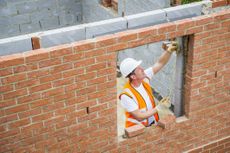
Germany’s house price bubble is only just getting started

By MoneyWeek editor-in-chief Merryn Somerset Webb Mar 30, 2012

Merryn Somerset-Webb

Share with
friends:

Comments (13) Print this article

Unemployment in Germany is now at its lowest since 1990.

Today a mere 6.7% of the population are jobless – a record low for the unified country (ie since 1990).

Those in work are pretty confident in their futures too. How do we know? They’re spending money.

The exporting powerhouse that has developed in Germany on the back of euro weakness is still doing well of course. But as the FT points out this morning, what has really grabbed the attention of the economists is the fact that private consumer spending rose 1.5% last year, and looks set to do something similar this year.

However what really catches our eye is not the spending on wine and the like (for example imports from Spain rose 20% last year).

No, it’s the spending on houses…

German fear of inflation is driving house prices higher

We started looking at German property back in 2007. We noted that you could buy an apartment in Berlin for a tenth of the price of one in London.

We saw that only 40% of Germans owned their own homes, but that the mortgage market was about to be liberalised – making it easier for them to shift from renting to buying.

We saw the high yields on offer. And we confidently predicted that, after two decades of entirely stagnant prices, anyone buying in was bound to do well.

We have a tendency of being four to five years early with predictions. This call turned out to be not much of an exception. Nothing much happened for a few years. But it’s happening now.

Prices across Germany rose 2.5% in 2010 and 5.5% last year (that’s twice the rate of inflation). In some cities, such as Berlin and Munich, apartment prices were up 10%. A few weeks ago, the FT even reported a very un-German and bubble-like trade in Munich: a house which sold for €3m six years ago has just changed hands for over €6m.


Sign up for a 3-week FREE trial of MoneyWeek
and get the following free as well

"The only financial publication I could not be without."
John Lang, Director, Tower Hill Associates Ltd


So what’s going on? Clearly this sudden change isn’t just about rising confidence among the general population. It is also about some kind of lack of confidence. For example the British still want to pile into the buy-to-let business because it feels solid in a time of economic flux and because they think it offers an income. The Germans too are searching for a financial safe haven.

And property doesn’t just offer a good yield (in much of Germany at least). It offers a degree of protection against the fallout from the problems in the rest of the eurozone and against inflation.

“People have started to look for alternative investments, and one of the obvious ones is bricks and mortar. Couple that with angst about inflation, which is driving people into real assets, and what you see is high demand for property”, Andrew Groom, head of valuation and transaction advisory for Germany at Jones Lang LaSalle, the property consultancy, told the WSJ.

But it’s also about the fact that construction has been lagging behind demand. In Berlin, the supply of new housing rose 0.9% from 2005 to the end of 2011, but nearly 5% more households were looking for a home.

And most crucially of all – given that demand for property is mainly about the supply of credit – it is about rising lending. Earlier this month, the association of German savings banks (whose members provide around a third of residential lending), said that property loans were the “biggest factor in increased lending” and that their customers were showing a “strong preference for material assets”.

There is, says Kai Carstensen, an economist at Munich-based think tank the Ifo Institute, a good chance that a large part of the liquidity on offer from European Central Bank loan programmes is going straight into the German residential market via the German financial system.

How can you profit from German property

There’s probably a way to go with all this. Jens Wiedman, the president of the Bundesbank, has warned of rising inflation pressures. He has started using the word bubble; and noted that he will be keeping a close eye on rising asset prices. But it is hard to see exactly what he might do about them beyond watching them.

Part of Europe’s problem over the last decade has been the fact that interest rates have been set at a rate that has suited Germany rather than the rest of the union. In short, they have been much too low.

It is hard to see anyone thinking it might be a good idea to double up on that error by raising them now to stop a property bubble in Germany, even as Spain, Ireland and Portugal implode.

The International Monetary Fund might think that pre-emptive action to prevent asset bubbles is a good idea. But if any action to stop price rises in Germany might mean that price falls in say Ireland (where prices were down 18% year on year in February) accelerate, I can’t see that anyone else would be on board with the plan.

So how can you benefit? You could nip over to Berlin and pick up your own flat. Otherwise there aren’t that many options. Our old favourite Speymill overleveraged itself into the crisis, and is no longer with us. So much for that.

We’ll look at other possibilities in more detail in an issue of the magazine soon but those who want something to be going on with might look at GSW (FRA:GIB). It is listed on the Frankfurt Stock Exchange and owns leases and manages residential apartments in Berlin.

• This article is taken from the free investment email Money Morning. Sign up to Money Morning here .

Our recommended articles for today

Mervyn King is wrong - QE is bad for pensioners

The governor of the Bank of England thinks quantitative easing is having no detrimental effects on pensions. But he's wrong, says Phil Oakley. It is hammering pensioners' incomes.

Profit by borrowing a billionaire’s jet

Owning a private jet may be beyond the means of most penny share investors. But there's money to be made looking after them, says Tom Bulford. And this small-cap company is doing just that.

Comments (13)

Share with
friends:

Comments

  • 1. Elvis Presley

    (30 March 2012, 11:00AM)  Complain about this comment

    There are other ways for the Germans to stop a property boom than the ECB raising rates. However, I'm with you on German property being a reasonably safe bet not to lose money. I wanted to pile into German property in 2005 (with a high level of Sterling), but my wife didn't want to.

  • 2. simon

    (30 March 2012, 11:11AM)  Complain about this comment

    Presumably a sterling buyer of GSM gets pure euro exposure, as well as German real estate.

    Bit of a dampener...euro still overvalued, surely.

  • 3. Gregor

    (30 March 2012, 01:54PM)  Complain about this comment

    There are some stocks you should consider for exposure to German property.

    IVG and Patrizia own buildings, Hypo Real Estate and Aareal provide mortgages.

  • 4. Investor

    (30 March 2012, 04:12PM)  Complain about this comment

    Thanks to your articles in 2007, I popped over to Berlin and picked my self an entire building, a large piece of land and a bunch of apartments. Thank you!

  • 5. Christopher

    (30 March 2012, 04:30PM)  Complain about this comment

    Jens Wiedman can and will influence tax policy if required Merryn.

  • 6. Niall

    (01 April 2012, 12:54PM)  Complain about this comment

    But you havent factored in the imminent break-up of the eurozone currency. As Spain edges towards default we'll either see euro QE or maybe a two tier Northern and Southern (PIIGS) euro currencies, if not a reversion to each countries respective currencies, peseta, lira etc

  • 7. Boris MacDonut

    (01 April 2012, 03:30PM)  Complain about this comment

    This is a VERY difficult one to call. If you've ever been there you will know that germany is not like any other place on earth.so it's housing market will be a as enigmatic and contrary as it's increasingly odd people.

  • 8. lordeggbut

    (02 April 2012, 10:26AM)  Complain about this comment

    Merryn dear, I do wish you would give a fuller picture in these articles.
    @Boris MacDonut

    You are absolutely right Boris. I've been over to Germany 3 times to look at property & it is far from a no-brainer. The whole set-up is totally different to other markets. Anyone going in with the UK/Spain/Ireland/US... attitude will probably rue their decision. From what I know the market in Berlin is actually going through a come-down after a mad boom. I know one person who is still trying to sell his whole block of flats but can't shift them. Law in Germany is heavily weighed towards tenants & against landlords (not saying this is a bad). ...continued

  • 9. lordeggbut

    (02 April 2012, 10:26AM)  Complain about this comment

    continued...
    Tenants have alot of clout & can reduce rent if they are not happy with x,y,z. Secondly, don't even think about "doing up" a place in Germany. It's horrendously expensive and only to be attempted by Germany Limited companies who get tax breaks. Also, make sure you look into the energy efficiency aspects. This is a huge deal in Germany, They have many huge, period apartment blocks that you can pick up (the whole thing) for the price of a flat in any UK city. But what is it going to cost you in maintenence? And more importantly how energy effiecient is it. They are going towards an Energy rating system, and if your old building one day ends up with an F rating and all your tenents say we are only going to pay you 50% now because your building is not efficient what will you do? Lastly you can't just put up rent willy nilly. It is controlled by the govt. Max 20% rise every 3 years. Selling is not easy. Plus the transaction cost to buy in Germany is MASSIVE. Watch out.

  • 10. Brit in Germany

    (02 April 2012, 10:59AM)  Complain about this comment

    lordeggbut sums up a lot of the differences but I still think that Merryn is right about prices being likely to rise in the short-medium term. Whether it is a good investment or not depends on your personal circumstances.

    I have a rental property in the UK and one in Berlin, both in fairly average but certainly not rough areas of the respective cities. I also own my place that I live in here in Germany. My Berlin tenant is good as gold. I am just in the process of having to evict my tenant in the UK for rent arrears. The second time in 3 years this has happened. Which leads me to point 1. Competency of managing agents (Hausverwaltung) IMO is much better in Germany. Plus tenancies are much longer than the regular 6-12 months in the UK so the chances of you getting a bad apple are fewer.

  • 11. Brit in Germany

    (02 April 2012, 11:00AM)  Complain about this comment

    Point 2 - cities in Germany are a good investment. Stay away from the countryside and small towns except for maybe ski resorts like Garmisch-Partenkirchen. Selling houses in the sticks can take literally years in Germany. Point 3 - Purchase costs are high (Notary 1.5%, Stamp duty 3.5%, Agents commission which the BUYER pays...up to 6%) so only consider buying if you want to keep it for the long term. Point 4 - Germans are often by their nature very risk averse so what seems like a good investment to us Brits may to them seem like a punt. Trust your instincts!! Buy-to-let is uncommon here except for property that is inherited. Point 5 - BTL offers tax breaks for residents in Germany but profits from the stock market carry a 25% CGT applied at point of transaction. Tax-free threshold is only about € 900 for singles, € 1,600 for couples! Sale of a property is free from CGT after 10 years.

  • 12. HKM

    (13 May 2012, 06:56AM)  Complain about this comment

    Another potentially extremely lucrative trade on the German economy is Esprit (HK listed 330) - this brand has the majority of it's sales in Germany but is currently undergoing a restructuring that appears to be already reaping benefits. The current share price is still around 10% of what it was at it's peak...

  • 13. Davidiain

    (23 July 2012, 02:04PM)  Complain about this comment

    Houses are for people to live in , bubbles are for blowing. How about not fuelling the madness that has left so many of our young with no chance of buying a home and that has, to some extent caused all that we are going through now.
    If you want to earn some money do some useful work./

Leave a comment

This will be the name displayed with your comment.

This helps us verify comments are genuine. It will not be displayed anywhere on the site and is stored confidentially.

Please keep your comment within 1,000 characters and relevant to the main topic. We encourage healthy debate, but we don't allow insults or bad language. Anything off topic or unpleasant, we'll remove. Enjoy the conversation! Thank you.

captcha To prevent spam-related comments please enter the characters shown in the 'Captcha' box to the left.

By leaving a comment you accept our terms and conditions.


>