This precious metal hasn't been so cheap in 20 years

By MoneyWeek Editor John Stepek Nov 08, 2011

John Stepek

Share with
friends:

Comments (7) Print this article

Gold has dropped out of the headlines in recent weeks.

The recent crash from $1,900 an ounce to below $1,600 seems to have knocked a lot of the froth out of the market. Its steady recovery back to near-$1,800 has gone virtually unnoticed by pundits who were all over it at its high.

As my colleague Dominic Frisby has pointed out already, that's good news. The fact that the press has lost interest in it so rapidly is a healthy sign that there's plenty of life in the bull market yet.

So we're still big fans of gold, and reckon everyone should have a corner of their portfolio set aside for it.

But if you're feeling adventurous, there's another precious metal out there that's looking particularly cheap right now…

Platinum looks very cheap compared to gold

Platinum has traditionally been one of the most precious of the precious metals, far more precious than gold or silver. When banks are trying to tempt you into taking one of their rip-off accounts or credit cards, the 'platinum' service is always more expensive than the 'gold' one.

But in recent months, the reverse has been true of the metal prices. Platinum, at around $1,650 an ounce, is trading below gold at around $1,790 an ounce.

This is unusual. Indeed, platinum hasn't been this cheap compared to gold in more than 20 years. The chart below shows the ratio of platinum to gold (you get this number by dividing the gold price into the platinum price). When the line is falling, platinum is getting cheaper compared to gold. As you can see, platinum really is at a low ebb compared to gold.

Platinum/gold price ratio

Source: Bloomberg

What drives each of the precious metals

Before we get carried away, it's important to understand that although platinum, gold and silver are all precious metals, they are each driven by different factors. So there are good reasons for their relative values to get out of whack with each other.

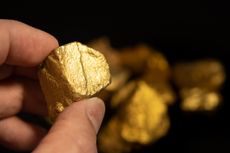
Gold is almost a purely monetary metal. Throughout history, gold has been used as money because it's a very effective form of currency. People buy it because they are worried that their other investments will be eroded by inflation, or destroyed by bankruptcy.

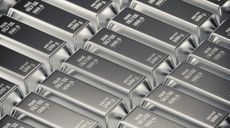
Silver, which is more common than gold, also has monetary uses, but it is an industrial metal too. That's why it's even more volatile than gold. The threat to the financial system makes it look attractive from a monetary point of view. But when the economy looks like it's on the verge of collapse too, silver tends to suffer.


Sign up for a 3-week FREE trial of MoneyWeek
and get the following free as well

"The only financial publication I could not be without."
John Lang, Director, Tower Hill Associates Ltd


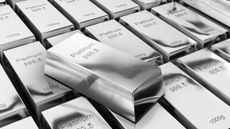
What about platinum? While you can buy platinum coins and ingots, it has very little monetary use. It's high value and quite portable, so you can argue that it's a useful 'real' asset to hold as a store of value. But it's never been used as money and it seems very unlikely that it ever will. Platinum's main role is in industry, and in catalytic converters (which filter exhaust fumes) in cars in particular.

So you can see that there are some good reasons for platinum to be trading below gold today. During the 1980s and 1990s, gold was in a bear market. Investors didn't place much of a premium on gold's monetary role. And in the '00s, platinum prices spiked well above gold as demand for it in industry grew.

The reverse is true now. Investors are placing a far higher premium on gold's function as a store of value. But they are sceptical about the state of the global economy, and concerned that industrial demand for platinum will drop off.

The bullish case for platinum

However, there are other reasons to think that platinum may have now fallen too far. Platinum is not widely distributed in the world. Around 60% of global production comes from South Africa.

As Tatyana Shumsky points out in US financial paper Barron's, rising wages for miners and rising energy costs "are threatening to push the cost of extraction above current market prices". This isn't made any easier by the fact that "platinum mines are the deepest and most dangerous in the world".

So these mines are expensive to operate, and they are vulnerable to disruption. What happens when the cost of pulling a metal out of the ground rises above the price you can fetch for it in the open market? You shut down the mine. "Operators will simply shut their doors rather than run a mine at a loss."

Of course, if mines shut, that hurts supply of the metal, which in turn should push prices higher.

On the demand side, there has also been the disruption to car makers caused by the Japanese earthquake earlier this year. But as Shumsky notes, "while that production has been delayed, no one believes it isn't coming back".

So supply of platinum is tight and may fall, while demand is flat but may recover. And at the same time, the price is at a more-than-20-year low compared to gold. I'd say that at the very least, that makes platinum look worth a punt at these levels. The easiest way to get exposure to the platinum price is through an exchange-traded fund, ETFS Physical Platinum (LSE: PHPT).

• This article is taken from the free investment email Money Morning. Sign up to Money Morning here .

Comments (7)

Share with
friends:

Comments

  • 1. Magnus

    (08 November 2011, 10:52AM)  Complain about this comment

    It would be useful to have seen this chart against a mixed bag of precious metals rather than the one which has had a boom in recent years.

    Also, I would be interested to know if like silver, platinum has an industrial substitute once it hits a certain price point?

  • 2. Chris

    (08 November 2011, 01:24PM)  Complain about this comment

    An intersting aspect to consider could also be the relative abundance of the two metals, platinum is apparently 0.005ppm (parts per million) by mass in the earth's crust while gold is apparently 0.004ppm. If gold and platimum deposits tended on average to have an equal cost of extraction and both were used purely as a store of wealth then you might expect gold to have 20% higher value as it would be 20% rarer than platinum?

  • 3. mike

    (08 November 2011, 01:46PM)  Complain about this comment

    RE : ETF LSE PHPT There is a very interesting article on ETFs at
    GoldSilver.com warning of fraud titled Silver Update 11/7/11 ETF EPIC
    TRADING FAILURE. It's a very good explination. I'm out!

  • 4. Segedunum

    (08 November 2011, 07:58PM)  Complain about this comment

    "Silver, which is more common than gold"

    This is completely, totally and utterly false. Silver is far rarer than gold, plus in addition to being money has industrial applications.

  • 5. Chris

    (09 November 2011, 01:14PM)  Complain about this comment

    @ Segedunum- out of interest what do you base the statement 'silver is rarer than gold' on?
    According to the wikipedia article 'Abundance of elements in Earth's crust', silver has a an abundance of 0.075ppm by mass in the Earth's crust, making it almost 19 times more abundant than gold.

  • 6. Brian W

    (09 November 2011, 04:41PM)  Complain about this comment

    Most interesting, and a view followers of PGM's would readily agree with. However, I might suggest that Palladium has an even broader upside in the near term due to the near 1:1 interchangeability of it's application in catalytics with Platinum, but is more than 60% cheaper. The North American region around the Great Lakes may well be the next significant PGM source, considering the amount of advanced exploration and near term projects that exist in the region. Palladium, the number one performing precious metal YoY 2009 - 2010. Keep an eye on it, as demand begins to outstrip supply.

  • 7. Segedunum

    (10 November 2011, 04:07PM)  Complain about this comment

    "out of interest what do you base the statement 'silver is rarer than gold' on?"

    Don't believe everything you read in Wikipedia. The silver supply has gone down steadily over the decades due to its increased use in industrial applications. There is actually only four months of supply until it runs out and silver miners are making nothing out of it.

Leave a comment

This will be the name displayed with your comment.

This helps us verify comments are genuine. It will not be displayed anywhere on the site and is stored confidentially.

Please keep your comment within 1,000 characters and relevant to the main topic. We encourage healthy debate, but we don't allow insults or bad language. Anything off topic or unpleasant, we'll remove. Enjoy the conversation! Thank you.

captcha To prevent spam-related comments please enter the characters shown in the 'Captcha' box to the left.

By leaving a comment you accept our terms and conditions.


>