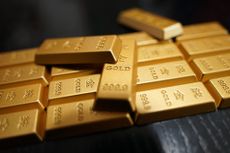
Central banks are buying gold – is this a sign to sell?

By Matthew Partridge Jul 26, 2012

Matthew Partridge

Share with
friends:

Comments (20) Print this article

Never, ever fall in love with an investment. No matter how much money it’s made you.

If you had bought technology stocks in the early 1990s, then by the end of the decade you’d have made a fortune – on paper. By that point, parting with those companies would have felt very painful. But if you had kept holding for just a little longer, you’d have seen your paper fortune evaporate.

The same thing happened with the property bubble in the early ‘00s.  Lots of erstwhile real estate barons ended up bankrupt.

So what about gold? Since the start of the century, it’s been one of the best-performing assets on the planet. It’s made early investors a lot of money, and it’s an investment we’ve been very keen on.

But as anyone who bought in 1980 will know, while gold might be a good store of value over the very long run, it can endure some pretty awful bear markets too.

And while we think it’s worth having a portion of your portfolio in gold consistently as insurance, you don’t want to have the lion’s share of your wealth invested in it when the next down-cycle comes.

Gold’s suffered something of a lull in recent months. Combined with the fact that central banks - never great market timers - became net buyers last year for the first time in decades, it’s worth asking if their interest in the yellow metal is a sign to the rest of us to get out.

Our central bankers have a poor investment record

Central bankers have generally made a hash of managing the global economy. Rather than reining in over-exuberance during the bubble years, they fuelled it, by cutting interest rates at the first hint of any slowdown.

This knack for doing the wrong thing at the wrong time extends to their investment decisions too. As Ronald-Peter Stoeferle of Erste Group Research puts it in one of his recent mammoth reports on gold, “central banks tend to be civil servants with an extremely pro-cyclical investment behaviour”.

In other words, they’re very good at buying at the top and selling at the bottom. They are a classic 'contrary indicator'. The obvious example is Britain’s decision to sell gold in 1999.

Clearly this was driven by then-chancellor Gordon Brown, so it’s not all down to the Bank of England. But in any case, the sale meant that the UK missed out on the gold bull of the next 13 years.


Compare the UK's leading gold brokers Gold

If you're interested in buying gold, our up-to-date directory of the foremost gold brokers and ETF funds makes essential reading.

Gold broker comparison table


Indeed, the decision was so badly handled that it led to claims that Brown was acting to protect several major banks from a disastrous decision to short gold. GATA (the Gold Anti-Trust Action Committee) argue that this is still going on.

The Libor scandal means that we can’t rule anything out. However, for now the evidence points to cock-up rather than conspiracy. Indeed, at the time, The Economist called the BoE’s gold sale, “sensible portfolio diversification”.

Moreover, The Economist also pointed out that “Britain’s sales are not unusual; nor are the amounts particularly large. Canada, Belgium and the Netherlands have each sold more than the 415 tonnes Britain plans to dispose of.” Even Switzerland began selling gold, a process that has led to their gold reserves falling by 60%.

In short, the BoE wasn’t the only central bank to get its gold timing badly wrong.

Which central banks have been piling into the gold market?

So that raises the question: should we be worried now that central banks are starting to buy gold again? As Stoeferle notes, net purchases in 2011 were the highest seen since 1964.

However, we’re not so sure we need to be worried yet. As Stoeferle points out, the majority of the gold has been bought by central banks in developing economies, such as Mexico, Russia and Turkey. At this stage, such central banks are generally just 'catching up' with developed markets.

For example, troubled peripheral eurozone nations Portugal and Greece have 90% and 80% respectively of their central bank reserves in gold. The US isn’t far behind. China and Saudi Arabia, on the other hand, have less than 10% of reserves in gold.
 
“Compared with the industrialised nations, the majority of central banks in emerging nations remain clearly underweighted in gold.” That means they need more to hedge their huge exposure to the US dollar. It’s also worth noting that China and Russia have been net buyers in the last decade, so it’s not as though their behaviour has suddenly changed.

However, if developed economy central banks started buying gold again, that would be more worrying. Indeed, says Stoeferle, given the BoE’s track record, if it “were to announce purchases, we would… regard this as a warning signal for the gold price”.

The good news is that this hasn’t happened yet. And it may be some time before it does. As Tim Price pointed out the other day in Money Morning, most developed-world central banks are more preoccupied with money printing and setting negative interest rates in order to inflate away some of their debt burdens. Given these policies, we think gold could see more significant gains before its time in the sun is over.

Comments (20)

Share with
friends:

Comments

  • 1. Pusser

    (26 July 2012, 05:47PM)  Complain about this comment

    Interesting view as I appear to have identical skills to central banks. Perhaps you ought to pay me commission so every time I buy, Moneyweekers can get out at the right time and every time I sell, Moneyweekers need to rush in with their money.

    Same with horse racing although I have stopped having little flings on them because it puts a curse on the poor animal the moment it leaves the starting gate...if it even manages to get to the sodding gate.

  • 2. Chester

    (27 July 2012, 11:25AM)  Complain about this comment

    Whatever central banks are doing, there is a view that gold is on its path towards $500. That has credibility if you believe we are at the start of a deflationary depression, rather than a double dip recession that political meddlers believe they can resolve

    Time will tell, but I support the view that cash is the place to be, which I will use to buy gold when we will really need it. If inflationists were right, gold would not be on it's downward path in the face of fears of a Euro bust up, and idiot central bank unprecedented money printing. Hedge against uncertainty? It doesn't get more uncertain than today! Hedge against inflation? Absolutely, but not now

  • 3. Nigel Hickey

    (27 July 2012, 11:28AM)  Complain about this comment

    Not withstanding the poor timing of central banks, as long as governments continue to devalue their currencies by printing more money I'm happy that gold will continue to be an attractive investment.

    Most governments are currently broke. I think this time any move to gold by central banks would be an admittance that the banking systems are broken too and are getting worse. The dollar is strong but as one writer said it's only the prettiest horse in the knackers yard.

    Gold will fall but it's hard to logically argue it is setup for a fall any time soon given the amount of soverign debt and fraud in the global financial system.

  • 4. Beamtree

    (27 July 2012, 11:52AM)  Complain about this comment

    Er, nobody knows anything - the rest is all crap!!!

  • 5. Daikoku Research

    (27 July 2012, 11:52AM)  Complain about this comment

    Everything at the moment appears to hinge around the U.S. Presidential election. This particular circus is warping financial realities more effectively than usual. In the week immediately after the election, whichever contestant wins the beauty show, the President will announce that the economy is in a lot worse state than was initially supposed. Then the pigs of war will run flaming down Capitol Hill.

    Being in gold at the moment is not for the feint hearted. The glittering metal is a barometer of quantum economics and its uncertainty principle. Voices, as usual experts abound, come from all directions analysing the chicken guts in a multiplicity of ways, they advise whatever it is the listener really wants to hear. That has to be the central hub, the unmoving point; the investor is now in a place where only his/her opinion has weight whilst all around spin in the uncertainties of the time.

  • 6. Stephen Griffiths

    (27 July 2012, 12:07PM)  Complain about this comment

    At some point this house of cards is going to fall. The derivatives markets run into trillions. The world is awash with fake assets...paper promises to sell things that aren't worth the paper they are printed on. Someone has to bite the bullet and press the reset button. It looks like smart money is already racing into hard assets like land and commodities, things that have value and can't be replicated easily.

    Does gold fall into that category? Logically there is no reason why it should other than the fact that it has performed exactly that role for us for 4000 years or so up until 1971. Critics say it is pretty useless but actually that unclouds the issue. It's harder to price silver as it gets used up. Gold doesn't. I'll take the 4000 year history over the failed economic experiment of the last 40!

  • 7. Clarinetplayer

    (27 July 2012, 04:08PM)  Complain about this comment

    Chester seems to think that gold only makes sense as a hedge against inflation and that, in a defaltionary environment, its value therefore would go down. But as noted in some of the other comments, it's probably not a bad idea to hold some gold as insurance against financial calamity - of whatever kind. I think that an eventual stabilization of the international financial system and a rise in interest rates are what could lead to a general decline in the gold price - that is, increased confidence in paper money and the ability to earn a return on it (unlike gold, which does not generate income, per se).

  • 8. shortchanged

    (27 July 2012, 04:25PM)  Complain about this comment

    The Rothschilds and other mega rich families have substantial gold holdings, nuff said?

  • 9. jeff scott.......

    (27 July 2012, 04:35PM)  Complain about this comment

    Sell Gold now at the top of the market.Buy property bargains.
    With so many distressed sales available now is the time to buy to rent.
    The country is short 3 million homes.The rental market is booming.

  • 10. NICK GREENWOOD

    (28 July 2012, 05:44PM)  Complain about this comment

    Being an activist investor I like to talk, but mostly I like to trade - STOCKS.

    I hold just two gold shares. One for two years which doubled then retreated back to where it started as the Gold Juniors suffered a recent bear market. The second bought last week as the bear market in the Juniors is set to change and almost anything you buy will double/treble over the next year. The better stocks will provide multiple returns - IMO.

    Personally I won't buy any gold stock as trading resource stocks is a risk in itself; so why take another risk - POLITICAL RISK!

    I don't trust "Stans", I don't trust Africa, I don't trust S. America - too many dictators, too much corruption.

    So I will only buy resources in Australia, Canada and the USA.

    Two current Best Buys - both in Canada:

    # Spanish Mountain Gold - TSE:SPA @ C$0.40
    # Lake Shore Gold - TSE:LSG @ C$1.10

  • 11. NICK GREENWOOD

    (28 July 2012, 05:47PM)  Complain about this comment

    Stephen Griffiths states above: "I'll take the 4000 year history over the failed economic experiment of the last 40!"

    Absolutely!

    So what to do?

    Being an activist investor I like to talk - & trade - STOCKS.

    So, see next post:

  • 12. Chris

    (28 July 2012, 11:17PM)  Complain about this comment

    I just can't help thinking that we have possibly gone nearly a full circle from the beginning of the crisis with the early pig countries; Portugal, Ireland and Spain.
    Now with Ireland back in the capital markets I can't help having a thought of a possible global recovery.
    Waves of deflation are keeping interest rates at record lows and with this the possibility of a sustained recovery if confidence is returned to the markets.
    However inversely speaking what goes down further must be dropped higher and this is where interest rates will eventually be.
    Gold I feel is on a losing battle in a deflationary spiral and will surely succumb to higher interest rates.
    Only a complete collapse of the system as we currently know it will drive gold to cataclysmic levels; so the question is are we headed for a collapse or a recovery and the start of the "great recovery"?
    Nobody knowscthatscwhy we have bears and bills and nice government men; and we know which way are betting.

  • 13. Chris - correcting last sentence from previous commentapologies

    (28 July 2012, 11:27PM)  Complain about this comment

    Nobody knows which way It's going for sure and that's why we have bears and bulls and nice government men; and we know which way they are betting. I for one will be betting on a "The Great Recovery"

  • 14. Eddie

    (29 July 2012, 05:04AM)  Complain about this comment

    IMHO: Buy gold; sell property: it's heading for a crash - the property prices in the US are stupidly high, propped up by the bank of England and politicians. Gold has further to go, IMO.
    But so many mortgages in the UK are interest only and more than haqlf a million people are more then 6 months behind in arrears. The average property price in London is £360k (for a hovel slum apartment) and the average salary is £34k in the UK. NO sustainable. Crash coming.
    Gold should continue to rise and/or stay stable for the foreseeable future - I'd say at least five years.
    The world economy really is in a bigger mess than most peopel realise: the Bank of England has not let the market decide the real price of property because it has been propping up and in effect subsidising the market. Anyone who buys investment property now will lose big time.

  • 15. Big Pete

    (29 July 2012, 12:53PM)  Complain about this comment

    It is true no-one knows anything for sure, but contrary to a few of the commenter's above it is my belief that the global economy is in a very very serious state. It is not going to just 'recover' as some suggest. Not at least without much of a lot of peoples wealth evaporating. I firmly believe that this is mathematically inevitable. I'm not sure over what time scale but providing I don't succumb to any freak accidents or diseases I am confident I am going to see this event play out. (Possibly/probably within 10 years)

  • 16. Big Pete

    (29 July 2012, 12:54PM)  Complain about this comment

    My long term target for gold is $10,000 per ounce, but that is providing the whole system doesn't collapse in the mean time. If it does the nominal value is irrelevant but I will always be able to exchange my gold for other stuff even in the very worst case scenario.
    So in summary, I think I could either make 8 or 9 times my money OR I will have enough to survive. Sounds like a win win situation to me.
    Folk in stocks will either lose 90% of their worth OR they won't even survive.

  • 17. Tony9178

    (30 July 2012, 11:23AM)  Complain about this comment

    China has found out that it had invested too much of its reserves in US debts and realize that it ought to be corrected. Now it has increased its gold purchases on the top of not exporting what it produces. Will China action not trigger the gold price to go north?

  • 18. Pusser

    (30 July 2012, 12:02PM)  Complain about this comment

    Re 16. Big Pete ....in the event you have to exchange your gold for other stuff due to a worse case scenario, what will the seller of stuff do with the gold you have given him\her. What value would gold then have other than perhaps making bling?

    I do not know the answer so this is a question rather than an opinion.

  • 19. Terry

    (31 July 2012, 12:34PM)  Complain about this comment

    Investors may understand the problem facing gold but the masses do not - come a euroland crash which could happen- the mass will look to protect their wealth in gold, this being a built in instinct over thousands of years.
    I am not quite so optimistic as Big Pete (would be nice!) but I see a potential for $3500 -$4000 in two years.

    We will see!

  • 20. Mahesh

    (03 September 2012, 05:46PM)  Complain about this comment

    Gold and silver are both shooting up on promises of what Gold loves from Papa Smurf Ben and now Super Mario is also on the same game too. All promises but no action , since 2009 from Original Disney Land and then until end of 2011 from Euro Disney Land.
    I do believe this artificial boost on Daily charts for Gold and Silver are false breakouts for the next move up for both Gold n Silver.
    Saying that I do have an idea from where I should be buying both at value prices, but have decided to leave Gold for Value prices for now and keep buying silver still as is still very cheap, pound for pound when compare to buying Gold just yet.

    Kind Regards

    MK


Leave a comment

This will be the name displayed with your comment.

This helps us verify comments are genuine. It will not be displayed anywhere on the site and is stored confidentially.

Please keep your comment within 1,000 characters and relevant to the main topic. We encourage healthy debate, but we don't allow insults or bad language. Anything off topic or unpleasant, we'll remove. Enjoy the conversation! Thank you.

captcha To prevent spam-related comments please enter the characters shown in the 'Captcha' box to the left.

By leaving a comment you accept our terms and conditions.


>