Cash in on solar energy's bright future

By James McKeigue Mar 11, 2011

James McKeigue

Share with
friends:

Comments (7) Print this article

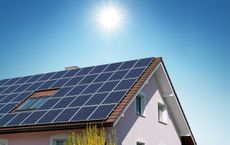
America has been here before: in the 1970s, wars and revolution in the Middle East pushed up the oil price and derailed the US economy. Since then, solar and wind energy have struggled to compete on price with fossil fuels. But that looks set to change as they finally achieve 'grid parity' – the moment when alternative energy is as cheap as conventional grid power. Solar has already achieved this in sunny islands such as Hawaii, while wind does the same in windy places such as Ireland. Now, thanks to technological breakthroughs and falling equipment costs, it is set to become more common.

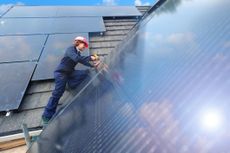
Measured by cost per kWh, the price of wind turbines has fallen 20% since 2007, but the improvements in photovoltaic (PV) solar have been more impressive. PV solar – the technology that turns sunlight directly into electric current as opposed to using its heat – now costs about 15 US cents per kWh. That compares to around eight cents per kWh for wind and anywhere between three and seven cents per kWh for gas and coal. Panels cost 50% less than they did in 2008. What's more, solar provides power at the hottest time of the day, which, thanks to air conditioning, matches peak electricity demand for many countries.

One reason for this is that mass production has brought down costs. In 2010 the installed capacity rose 70% to nearly 40GW, making PV solar the fastest growing power source in the world. With the global PV market predicted to grow by 50% per year, panel costs should fall 10%-25% in 2011. Technology also plays a part. Conventional silicon solar panels convert about 8% of the sunlight to electricity. Yet a new type of panel – a thin film sprayed with a compound of metals – can convert up to 16%. The new process has also lowered manufacturing costs, albeit fluctuations in material prices mean that the relative advantage can vary.

Taken together, "this all adds up to a bright future for cheap solar energy", says The Economist. The lowest-cost producers should soon be able to compete without subsidy against high-priced competition. "As solar cells' manufacturing costs keep falling, there will be ever more places where they are as economical as fossil fuels, without any need for green justification."

Yet solar stocks have suffered a sell-off recently. Cash-strapped governments in Europe – 80% of the market – have cut subsidies. That's spooked investors. But as the policy-makers point out, the improved economics of solar power mean it doesn't need such generous subsidies.
 
Take Italy, for example. When the government recently announced it would halt subsidies, solar stocks fell. And the market isn't worried about Italy alone, says Miller Tabak + Co's energy strategist, Kevin Simpson. Investors still remember the "cap placed on the Spanish market in 2008 that sent solar stocks and company earnings into a freefall". In effect, a "fear of total market collapse on structural subsidy changes still moves solar stocks".

But these fears are misplaced. "The country's high irradiance" and "relatively developed electric grid" would sustain a viable solar market "even if government support were removed". And should European demand slow, demand from the rest of the world is expected to pick up. China has highlighted solar in its 12th five-year plan, while California has mandated that 30% of power used in the state must be renewable. Indeed, America is expected to overtake Germany as the biggest solar market by 2014. We look at a great US play below.

The best bet in the sector

Western solar producers, such as Germany's Q-Cell, have had a torrid time of it in recent years. The Chinese government has supported the industry in a big way. While the German government was busy subsidising consumption of solar power, the Chinese were subsidising the manufacture of it. Five of the top seven solar producers are now Chinese, although America's First Solar has the highest market cap. With a price war looming, there are better ways to play the sector.

Satcon share price

American technology firm Satcon (NASDAQ:SATC) makes the components that help connect solar power to the grid. It also helps convert the variable output of a solar plant into stable electricity for a utility. By doing so efficiently, it can boost a plant's overall output. It is the world leader in large utility components, although recently it has also brought out a range of products for micro-solar plants.

Strong growth in Asia and Europe helped Satcon generate record sales of $173m in 2010. It is also well positioned to benefit as America finally begins to tap its solar potential. Currently the firm trades at $3.79, but MDB Capital Group has a target of $5.50. On a forward p/e of 10.5, Satcon is a cheap nuts-and-bolts way to buy into solar growth.

Comments (7)

Share with
friends:

Comments

  • 1. Steve

    (11 April 2011, 01:40PM)  Complain about this comment

    The brightest thing about solar energy is the continuing need for other energy sources to provide the bulk of the energy that is used. Nuclear power is probably the only viable option to produce energy on the scale that will be needed.

  • 2. Investgreen

    (11 April 2011, 01:46PM)  Complain about this comment

    Take a look at Linc Energy and AFC Energy to see a better way than nuclear. [Underground coal gasification, CCS and fuel cells]. AFC also enables power balancing in wind and solar farms.

  • 3. solarpanel

    (23 April 2011, 09:29AM)  Complain about this comment

    Cash in on solar energy's bright future

    is very key

    i think so.

  • 4. northern point

    (26 April 2011, 11:37AM)  Complain about this comment

    Its a good start, we must go green for the planet and our children, if we step it up now, that generation will take it as the norm to reserve fossils and utilise what we have

  • 5. Anthony, Cape Town

    (26 April 2011, 10:09PM)  Complain about this comment

    Solar energy now costs 15c/kWh to produce this way, compared to 8c/kWh for wind, and between 3-7c/kWh for coal and gas.

    I smell a rat - is the writer saying that solar costs 15c/kWh anywhere?
    Obviously it must vary enormously - is he speaking about Southern Spain? He doesnt say - so he is either lying or being deliberately deceptive. So what is the truth? Part of the truth must be that in high latitude countries like the UK it is the height of absurdity for a govt to fork out huge subsidies for rooftop solar.

  • 6. Charlie Kirby

    (26 April 2011, 11:50PM)  Complain about this comment

    How can a per hour cost for solar be meaningful? There is a one time cost of installation but the effective cost of generation (pay back) would depend on too many variables and differ enormously from situation to situation, to be generalized into a single figure.
    With fossil fuel powered generation there is an ongoing input cost but with solar, only the initial capital cost (maintenance excepted for both). Unfortunately, with such an obvious inaccuracy, the whole article is cast into doubt. Perhaps the writer can address this.

  • 7. Guy H

    (01 May 2011, 08:43PM)  Complain about this comment

    I had evacuated-tube solar hot water collectors installed in 2003 in Darlington, County Durham. Just before installation they had a projected pay-back span of 10 years...Then VAT was reduced on these low-carbon technologies so the lower cost reduced the payback period to 8.5 years....then our beloved gas and Electricity providers hiked their prices skyward, which meant payback, relatively speaking, was reduced still further. By my own computations, I broke even in 2009, just 6 years after buying the system. it still has another 14 years life expectancy left in it. This talk of dubious economy by the naysayers is rubbish - I've got free hot water for 8 months a year for the next 14 yrs! i also remember a sceptical analyst saying back in 2003 that solar pv "would need oil to be $90 a barrel to be economic"....well, duh ?

Leave a comment

This will be the name displayed with your comment.

This helps us verify comments are genuine. It will not be displayed anywhere on the site and is stored confidentially.

Please keep your comment within 1,000 characters and relevant to the main topic. We encourage healthy debate, but we don't allow insults or bad language. Anything off topic or unpleasant, we'll remove. Enjoy the conversation! Thank you.

captcha To prevent spam-related comments please enter the characters shown in the 'Captcha' box to the left.

By leaving a comment you accept our terms and conditions.


FREE - MoneyWeek's daily investment emailJohn Stepek

Our free daily email, Money Morning, is an informative and enjoyable analysis of what's going on in the markets. Written by our Editor, John Stepek, and guest contributors.
Sign up FREE to Money Morning here.

>