An Australian stock to buy as China slumps

By Matthew Partridge May 22, 2012

Matthew Partridge

Share with
friends:

Comments (6) Print this article

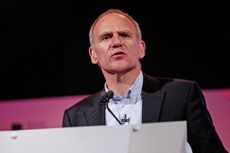
Last week I went to hear fund manager Michael Riddell of M&G Investments talk about his views on emerging markets.

When it comes to the biggest of them all – China – his take is that “the question is not if, but when China’s bubble will burst”.

We don’t disagree with Riddell. In fact, we’d argue that the bubble has probably already burst. It’s now in the process of deflating.

One country that’s already feeling the pain is Australia. As such, it’s an area we’d largely avoid. But not every Aussie stock will feel the pain from China’s bust…

China has passed the ‘Lewis Turning Point’

M&G’s Michael Riddell is a big fan of the work of the economist Arthur Lewis. Lewis’s idea was that most growth occurs during the change from a rural subsistence economy to a modern urban one. During this period returns to capital are high, encouraging investment.

However, once all rural labour has been absorbed, growth quickly slows. Attempts to continue the pace of growth via ever-increasing levels of investment, simply lead to poor returns. It also risks creating a credit bubble.

This is the 'Lewis Turning Point'. And Riddell believes that China has passed it. He also believes that the increase in private credit, which grew by more than 50% each year from 2009 to 2011, shows that there is a bubble.

Rising debt isn’t necessarily a bad sign in itself. Leverage usually increases as a country gets richer. However, Riddell points out that, despite its low per capita GDP, Chinese leverage is already on a par with much wealthier countries such as Hong Kong and Japan.

We’d be inclined to agree with Riddell’s take. Even if you’re not convinced, it’s certainly becoming clear that China has passed some sort of turning point.

As well as facing a fall in its long-term rate of growth, China’s short-term woes are mounting. April’s industrial production growth slowed down to 9.2% year on year, the lowest figure since mid-2009. GDP growth fell to 8.1%.

Although these figures both still sound impressive, you have to remember that – like every other government – China’s leaders aren’t above fiddling the data for propaganda purposes. This means that the trend, not the actual figures are key.

An even bigger hint of major problems is the latest trade data. Exports grew by 4.9%, compared with a year ago. This was much lower than the 8.5% expected. Imports effectively stayed the same, going up by only 0.3%. This suggests that China can neither export its way out of trouble nor rely on domestic demand.


Sign up for a 3-week FREE trial of MoneyWeek
and get the following free as well

"The only financial publication I could not be without."
John Lang, Director, Tower Hill Associates Ltd


As we’ve already noted several times, a slowdown in China should have a big impact on its '51st state' – Australia. While China’s massive demand for resources has shielded Australia from the global financial crash to a great extent, this is now set to go into reverse.

This would be bad enough even if Australia was in a hugely sound economic state. But it’s not. It has suffered a rampant housing bubble that has made it one of the most expensive places to live in the world. That bubble is already collapsing. According to the Australian Bureau of Statistics, average house prices have now fallen for five straight quarters.

Meanwhile, the latest economic surveys show that both the manufacturing and service sectors are in deep trouble, with activity in both shrinking rapidly. No wonder the Aussie dollar has toppled back through parity with the US dollar.

But there are still investment opportunities Down Under

Yet while this is clearly all bad news for the Australian stock market in general, you shouldn’t shun all Australian shares. Firms that have all, or most, of their operations abroad will not be affected by a domestic downturn.

One such firm, which we’ve covered here before, is Wasabi Energy (ASX:WAS; Aim:WAS), which handily enough is listed on Aim as well as the Australian market. This company owns the 'Kalina cycle' process, which creates energy from the heat given out by power plants. It is cleaner and more efficient than competing techniques.

It makes its money in three main ways. Firstly, it operates several power plants around the world, or owns them outright, as in the case of the Husavik plant in Iceland. It also licenses its technology to other companies, such as FLSmidth, a support firm for the cement and mineral industries. It also makes money from engineering, design and procurement.

The technology can already pay for itself given current power prices. However, the high cost of wind and solar energy means that governments may start classifying waste heat as a renewable. Indeed, this may be the only way that the EU can realistically meet its target for 20% of energy to be renewable. This would greatly boost demand and increase margins.

It also has some promising sidelines. Wasabi owns most of Aqua Guardian Group, which makes sheeting that reduces water evaporation. Unlike similar products, it has been designed to withstand high winds. This makes it suitable for markets such as Texas and the western US. Wasabi also has stakes in Clean TeQ, which cleans up the water from mining and shale gas, and Arfuels, a biofuel company.

Clearly, given the field it operates in and its size, it’s not a stock for widows and orphans. But if you’re looking for an adventurous play on alternative energy that should be able to avoid the pain of a China slowdown, it’s well worth considering for the high-risk part of your portfolio.

• This article is taken from the free investment email Money Morning. Sign up to Money Morning here .

Our recommended articles for today

Printing money is the only thing keeping the UK and US afloat

Don't be fooled - Britain and America are in just as big a mess as Europe. The main difference is that they can print their way out of it, says Merryn Somerset Webb.

The e-book price-fixing scandal

The US government is accusing electronic book publishers of colluding to fix prices. Does it have a case, and what will it mean for the industry? James McKeigue investigates.

Comments (6)

Share with
friends:

Comments

  • 1. Daniel

    (22 May 2012, 12:54PM)  Complain about this comment

    Hey Matthew, thanks for your artcile.

    You state "Chinese leverage is already on a par with much wealthier countries such as Hong Kong and Japan".

    Sorry I don't follow, in which sense? Do you mean household debt? Do you have any statistics for that?

    On the sovereign side, China is sub 65% d/gdp (typically the tipping point) vs Japan plus 200%.

    Given they dont have as a developed bank market vs Japan I'd be surprised if the household was equally as leveraged?

    Do you have any figures for credit in China?


  • 2. China Watcher

    (22 May 2012, 01:21PM)  Complain about this comment

    "A blind trying to tell the shape of an elephant", this a Chinese saying to laugh at people who try to make judgements on a colossal entity from just a handful of information.

    Views like that of Michael Riddell's are not new, they had been around for over 30 years. Unfortunately, China hasn't collapsed as they have predicted while the West is heading towards their lost decade, or a lot worse.

    It's time for the cold war minded fund mangers/analysts in the West to dump their prejudice and spend time to really understand how China got here.

  • 3. Dr Matthew Partridge

    (22 May 2012, 05:00PM)  Complain about this comment

    Daniel, the Chinese figure is for credit/GDP. This counts all forms of debt, including households and private firms.

  • 4. 4caster

    (22 May 2012, 10:07PM)  Complain about this comment

    So, China's annual increase in GDP has slowed from double figures to 8.1%. And we're supposed to believe they are heading for a recession. The moneyed Chinese don't know what to spend it on. That's why the Chinese are the biggest buyers of gold, as well as China being the biggest producer of gold. And they are savers rather than borrowers.
    China is a command economy, in that what the ruling Communist party wants to happen, does happen. Presently they are trying to extend prosperity from the coastal strip to the impoverished hinterland. And I predict they will succeed. The poorer, populous regions only have to raise productivity a little, to provide a greater increase in both imports and exports. I foresee Chinese demand for imported raw materials soon rising again.

  • 5. Daniel

    (23 May 2012, 12:54PM)  Complain about this comment

    Thanks for replying. Though what is the absolute number? You said China is on a par with Japan in leverage? What is the source? I would love to know the numbers as the comment surprises me.

  • 6. Mark

    (25 May 2012, 08:38AM)  Complain about this comment

    You write: "China’s short-term woes are mounting. April’s industrial production growth slowed down to 9.2% year on year, the lowest figure since mid-2009. GDP growth fell to 8.1%."

    I'll repeat that back to you with a different bias: production growth has held up above 9% and GDP growth above 8% against a background of difficult world economic conditions.

    My question is, where are the woes of any kind, let alone short term? These are fantastic figures.

Leave a comment

This will be the name displayed with your comment.

This helps us verify comments are genuine. It will not be displayed anywhere on the site and is stored confidentially.

Please keep your comment within 1,000 characters and relevant to the main topic. We encourage healthy debate, but we don't allow insults or bad language. Anything off topic or unpleasant, we'll remove. Enjoy the conversation! Thank you.

captcha To prevent spam-related comments please enter the characters shown in the 'Captcha' box to the left.

By leaving a comment you accept our terms and conditions.


FREE - MoneyWeek's daily investment emailJohn Stepek

Our free daily email, Money Morning, is an informative and enjoyable analysis of what's going on in the markets. Written by our Editor, John Stepek, and guest contributors.
Sign up FREE to Money Morning here.

>