Tuesday 13th May 2008
moneyweek.com
MoneyWeek logo

The most important financial stories, and how to profit from them

Skip to navigationSkip navigation
wheat price, grains sector

Wheat's biggest bull market could be about to end badly

27.02.2008

This genius investor does dizzying levels of research to uncover...Half Price Shares!

This feature is part of our FREE daily Money Morning email. If you'd like to sign up, please click here: Sign up for Money Morning

You may not have realised it, but one commodity is currently seeing the greatest bull market in its entire history. Not gold, not oil – but wheat.

From its low of $2.40 in late 1999 to yesterday’s high above $12 is an eight-year, near-400% move. Wheat has never moved up so much.

I don’t mean to sound like a harbinger of doom, or perhaps I should say Grim Reaper, but the whole grains sector – whether it’s wheat, corn, soybeans, barley, whichever – has become worryingly reminiscent of uranium this time last year.

The shorting opportunity of a lifetime may be just around the corner…

From boom to bust in uranium

First let me recap on what happened to uranium. By the end of 2006, come New Year prediction time, uranium was the hot tip for 2007 (just as grains were this year). For five years or more the price of uranium had crept up beautifully, without anyone appearing to notice.

Then suddenly in October 2006 the well-documented flood at Cameco’s Cigar Lake mine made the headlines and everyone began talking uranium. “Supply can’t match demand,” declared the bulls. “China’s building so-many thousand nuclear power plants a year,” they went on. “Where’s the uranium going to come from?” “It takes ten years to get a uranium mine into production”; “Nuclear power is the only answer to the coming energy crisis”, and so on.

The thing is there was a great deal of truth to all these arguments and the uranium price went from a steady incline to a near-vertical ascent. Having stealthily risen from below $10 a pound to $70, it suddenly bounded another $70 to $140. Everyone was talking uranium. Every exploration company had suddenly added the word uranium to its name. Stocks were soaring. Even the Labour Government began talking nuclear. Then suddenly the stocks capitulated and over the next few months we saw brutal corrections in the uranium companies - in some cases, of 80% or more.

Uranium had traced out the typical pattern of a bubble from boom to bust. I have posted this excellent chart from Jean-Paul Rodrigue of Hofstra University before. But it merits re-posting. The typical small uranium stock traced a very similar pattern and in my view, grains may be doing the same.

Uranium: from boom to bust

Grains: the risk is to the downside

Take a look at the chart for wheat. Does it look bubbly familiar? This, my friends, is an accident waiting to happen.

Grain price

Yes, I know all the arguments. Asian diets are improving, their middle class is growing, they’re eating more meat, more grain has to be grown to feed the livestock, the drought in Australia has hit wheat supply, the Americans are using their corn to make ethanol, more fields are being turned over to corn, inventories are low, supply can’t meet demand, monetary inflation means higher prices in everything, what if we get bad weather and it kills the harvest?

I know all of this. They are all utterly convincing arguments that hold a great deal of truth – it’s because of this credibility that more and more people are climbing on board and pushing the price up further.

Nevertheless the price has got way ahead of itself in my view and is due a correction, potentially a nasty one. All the risk is to the downside.

This bull market began in 2000, but until very recently nobody was talking about it. Now the world, his wife and their shoeshine boy seem to be long grains. Not a good sign.

Great bull runs often end with a series of limit-up days (this is when the maximum daily move on the exchange is reached – unlike the FTSE 100, some smaller exchanges try to control volatility by limiting how far a price can rise or fall in a single day). We saw three limit-up days in a week a fortnight ago. The 30c limit has now been upped to 60 cents. We saw another limit-up on Monday and again yesterday. Is this your classic blow-off top? Many chartists would say so.

Looking at previous bull markets in wheat, the biggest was in the six years to February 1974 in which we saw a 312% move. Before that the biggest move was 173% in the four years to May 1898! In other words, as I pointed out at the beginning of this email, this eight-year, near-400% move, is the biggest in wheat’s history.

The subsequent corrections in virtually every major bull market in wheat saw it give back almost all of its gains. “Give back all of its gains?” I hear you say. “But that would take us back to $2.50 a bushel. Wheat’s up by over $2.50 this month alone.”

What goes up …

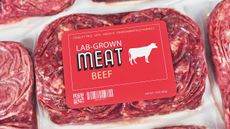
Buy meat, not wheat

One of the consequences of the high cost of grain is that it has become expensive for farmers to feed their cattle and pig. In fact, it’s so uneconomic many have been sending their livestock to an early slaughter. This has led to there being rather a surfeit of meat on the commodities exchanges with the resultant steep decline in the price of hog and cattle (this despite the rise of the new meat-eating middle-classes in Asia we hear so much about).

Further down the road, as more stocks are slaughtered, what surely lies in store is a shortage of pig and cattle to eat all this wheat. Meat, not wheat, is where you should be looking for an entry point in the coming months. As for wheat, your eyes should be looking towards the exit. You can learn more about how to buy into meat (and other promising softs) in this week’s MoneyWeek cover story (out on Friday). If you’re not already a subscriber, click here: 3-week free trial.

Rogues and villains

Moving back to metals, Mark Twain once described a mine as: “A hole in the ground owned by liar” and the small mining sector seems to have a phenomenal amount of rogues and charlatans operating in it. I’ve been looking at two junior oil and exploration companies with assets in Syria and Northern Iraq. Yes, Iraq. One is a shining example of how a company should be run; the other has been a catalogue of, to put it delicately, exaggeration. In a future Money Morning I plan to compare and contrast the two to show exactly what to look out for and what to be wary of in a junior resource company. I just need to check with the lawyers first what can and can’t be said …

Turning to the wider markets…


Enjoying this article? Why not sign up to receive Money Morning FREE every weekday? Just click here: FREE daily Money Morning email


Hong Kong rallies on tax cuts

In London, the FTSE 100 rose 87 points to end the day at 6,087 yesterday as investors were encouraged by a strong start on Wall Street. Banking stocks once again led the way. Standard Chartered gained nearly 8% on forecast-beating results. And Alliance & Leicester was the day's biggest gainer on enduring hopes of a bid from Lloyds TSB. For a full market report, see: London market close

On the Continent, the Paris CAC-40 added 53 points to close at 4,973. And in Frankfurt, the DAX-30 ended the day 103 points higher, at 6,985.

Despite PPI figures showing surging inflation, US stocks rose for a second day yesterday. Tech stock IBM cheered investors by raising its 2008 earnings forecasts. The Dow Jones added 114 points to end the day at 12,684. The broader S&P 500 was up 9 points, at 1,381. And the tech-rich Nasdaq closed 17 points higher, at 2,344.

In Asia, Hong Kong stocks soared after the government announced plans for corporate tax cuts. The Hang Seng was up 769 points, at 24,483. And in Japan, exporters led the way as the Nikkei climbed 206 points to 14,031.

Oil rises above $101 a barrel

Crude oil futures rallied above the $101 mark and hit a new closing high of $100.88 in New York yesterday due to ongoing cold weather in the US, which has led to strong demand for heating oil. And the oil price had risen a further $1 to $101.92 this morning. In London, Brent spot was at $100.24.

THe surging oil price saw gold hit a new record high of $963.40 today. And silver hit a new 27-year high of $19.43.

In the currrency markets, the pound fell back from its highest level against the dollar so far this year - 1.9971 - to 1.9907 as UK banking stocks slumped. Sterling was also lower against the euro, at 1.3212. And the dollar was at 0.6635 against the euro and 106.38 against the Japanese yen.

And in London this morning, shares in the UK's largest mortgage lender, HBOS, fell by almost 7% after the bank announced an 8.9% fall in H2 profit. HBOS revealed a £227m writedown on subprime-related investments and said that the outlook for 2008 remained 'uncertain'.

Our recommended articles for today...

An easy way to make profits like Warren Buffett
- It takes a special investor to make the sort of returns for which Warren Buffett is famous, but just copying his trades one month after they go public can lead to market-busting returns. We look at what copycats should be buying now: An easy way to make profits like Warren Buffett

Northern Rock: a lesson in how shares go down as well as up
- The private investors calling for compensation for their Northern Rock shares are behaving like children who have dropped their ice-cream on the pavement. They just have to accept that that is how the market works. For more from Tom Bulford on why Rock shareholders don't deserve compensation, see: Northern Rock: a lesson in how shares go down as well as up


FREE! For all our latest advice on making profitable investments, claim your 3-week FREE trial of the MoneyWeek website and magazine now.
FREE! MoneyWeek’s daily investment email. A quick, useful and entertaining round-up of the latest investment news, sent to your inbox first thing every morning.To sign up to our “Money Morning” email for FREE, just click here.
Free! Our daily email
Free Daily Email sign up
Money Morning is the FREE daily email from MoneyWeek – a punchy round-up of the latest investment news and profit opportunities. DON’T MISS IT!
New to MoneyWeek? Editor Merryn Somerset Webb explains what we do


FTSE 100 - 13 May 08